

This crockpot butternut squash soup simmers gently on the stovetop until the squash and potato are soft enough to blend into a smooth, velvety bowl. It is gluten-free, vegetarian, and it freezes well, so I often make it when I want lunches sorted for the week.

The potato does most of the thickening here, so the soup tastes rich without much cream at all. If you enjoyed my 31 Butternut Squash Recipes, this one belongs on the same list. Keep reading to see how simple it is to make this slow cooker butternut squash Soup in one pot.
Try This Stovetop Butternut Squash Soup
I make this soup all through fall and winter, usually when I bring home a squash too big to use in one meal. Softening the onion, celery, and garlic in olive oil first matters most, because it gives the soup a savory base instead of tasting only of sweet squash.
After that, it is mostly waiting. The pot sits at a low simmer for about half an hour while the squash and potato collapse, then everything gets blended smooth. I finish it with lemon juice and a spoonful of thick cream, which keeps the sweetness in check.
Why You'll Love It

- One pot: Everything cooks in the same pot, and I blend it right in there with a stick blender.
- Naturally thick: The starch from the potato and squash gives the soup body without any flour or cornstarch.
- Easy to make vegan: Swap the double thick cream for coconut cream or coconut milk, and the soup stays dairy-free.
- Good for batch cooking: It keeps 4 to 5 days in the fridge and freezes well in portions.
- Simple ingredients: Squash, potato, onion, celery, garlic and stock are things I usually have anyway.
Ingredients
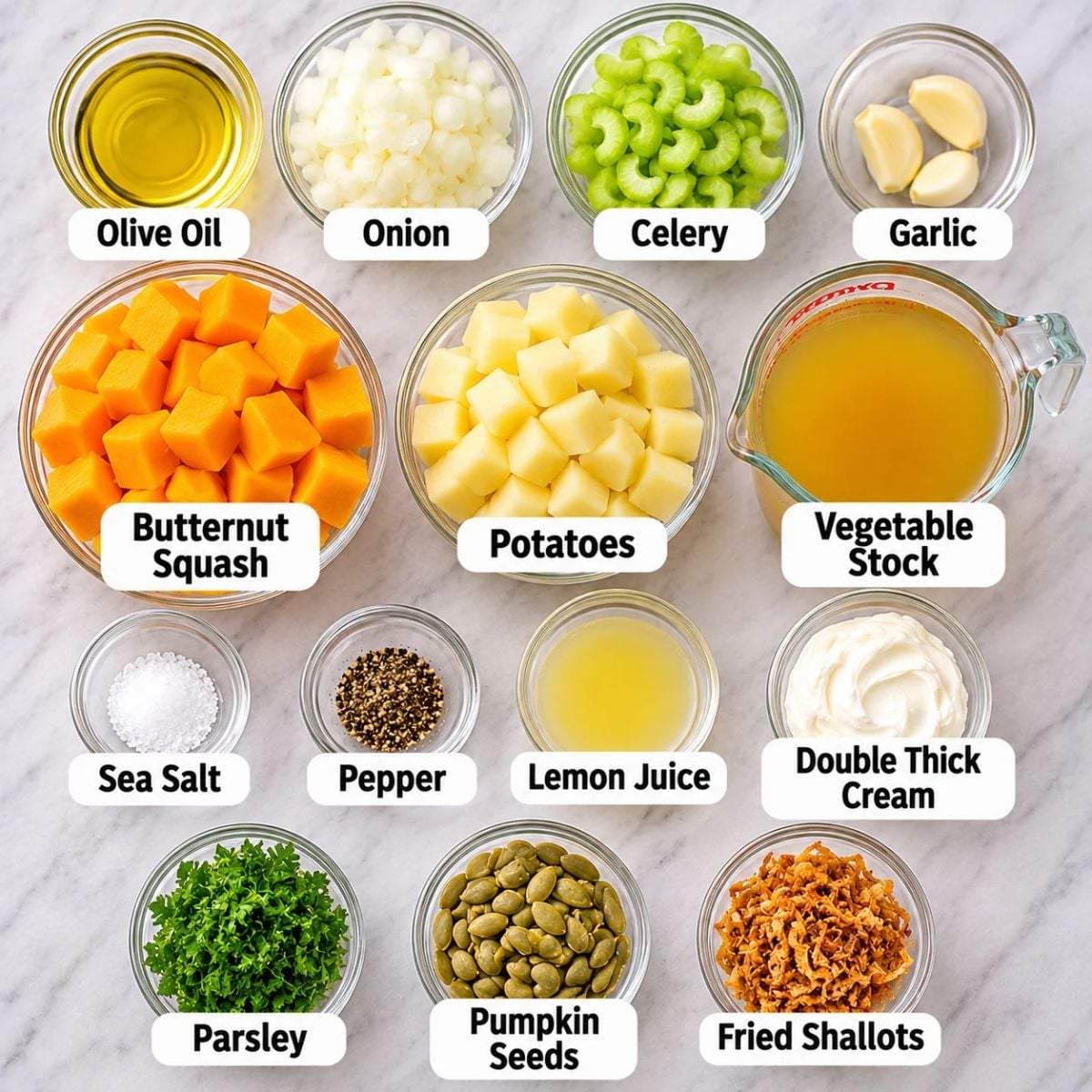
- Butternut squash: I like butternut because the flesh is dense and sweet and it breaks down into a smooth puree without any stringiness. Spaghetti squash would not work at all here since its flesh pulls apart into strands instead of blending creamy.
- White potatoes: The potato starch is what makes this soup thick and silky once it goes through the blender. Waxy new potatoes hold their shape more and give a looser, more watery soup.
- Celery: One stick adds a green, slightly salty note that keeps the squash from tasting like dessert. Leaving it out is possible, but then the soup leans much sweeter than I like.
- Vegetable stock: The squash and potato cook directly in the stock, so they take on flavor while they soften. Water does the same job mechanically, but the finished soup tastes flat and needs much more salt.
- Lemon juice: Two tablespoons stirred in at the end lift the whole pot and stop the squash from tasting heavy. Vinegar is sharper and leaves a harsh edge, so fresh lemon is worth it.
- Double thick cream: A couple of tablespoons off the heat make the texture glossy without turning the soup into something rich. Milk is far thinner and can look slightly curdled against the acidity of the lemon.
How to Make Easy Butternut Squash Soup
1. Heat the olive oil in a large heavy pot or Dutch oven over medium heat.
2. Add the diced onion, the sliced celery and the peeled garlic cloves. Cook for 5 to 6 minutes, stirring now and then, until the onion is soft and translucent but not browned.
3. Add the diced butternut squash and the diced potatoes. Stir for 2 minutes so every piece is coated in the oil.
4. Pour in the vegetable stock and add the sea salt and black pepper. Stir once and scrape the bottom of the pot so nothing is stuck.
5. Bring the pot up to a boil over medium-high heat, then turn the heat down to low so the soup is at a gentle simmer with just a few bubbles breaking the surface.
6. Cover the pot and simmer for 25 to 30 minutes, stirring every 10 minutes or so. If the liquid drops below the level of the vegetables, add a splash of water to keep them about half covered.
7. Check that the squash and potato are completely tender by pressing a piece against the side of the pot with a spoon. It should fall apart with no resistance in the center.
8. Take the pot off the heat and let the soup stand uncovered for about 5 minutes so it cools slightly before blending.
9. Blend the soup until completely smooth. Use an immersion blender directly in the pot, or work in batches in a food processor or blender and return the puree to the pot.
10. Set the pot back over low heat and stir in the lemon juice and the double thick cream until the soup looks glossy and even in color.
11. Taste the soup and add more salt if it needs it, but no more than a ¼ tsp. Warm it through for a minute, but do not let it boil once the cream is in.
12. Ladle into bowls and top with parsley, pumpkin seeds and fried shallots for crunch, then serve right away.
Cooking Tips
- Cut the squash and potato into similar-sized cubes so they finish cooking at the same time.
- Use a wide heavy pot with a tight lid, which holds the steam in and keeps the three cups of stock from boiling away.
- Keep the heat low once the soup is covered, because a hard boil reduces the liquid too fast and can scorch the bottom.
- Let the soup cool for a few minutes before blending to avoid hot splashes.
- If you use a jug blender, fill it no more than two-thirds full and hold the lid down with a towel.
- Stir the cream in off the boil so it stays smooth against the lemon juice. You can swap out the cream for sour cream if you prefer a more tangy taste.
- Add the lemon juice last and taste as you go, since squash varies in sweetness.
What Can You Serve With This?

- Crusty bread
- Garlic toast
- Green salad
- Grilled cheese
- Roasted chickpeas
- Dinner rolls
FAQs
For a thicker soup, simmer it uncovered for 5 to 10 minutes after blending so some liquid evaporates. For a thinner soup, stir in a little hot water or extra stock until it pours the way you want.
Yes. Use coconut cream in place of the double thick cream and stir it in the same way, off the boil. The soup stays creamy with a mild coconut note.
For a smooth soup, yes. The skin stays firm during a stovetop simmer and leaves little dark flecks and chewy bits even after blending.
It keeps 4 to 5 days in an airtight container in the fridge and up to 3 months in the freezer. Reheat gently over medium-low heat, stirring often and adding a splash of water if it has thickened.




Recipe

Crockpot Butternut Squash Soup
Ingredients
- 2 tablespoons olive oil
- 1 medium onion peeled and diced
- 1 large celery stick sliced roughly
- 3 cloves of garlic peeled
- ½ large butternut squash 5 cups of peeled and diced squash or about 2 lbs. / 1kg
- 2 large white potatoes peeled and diced into cubes
- 3 cups of vegetable stock (700 ml)
- ½ teaspoon sea salt
- ¼ teaspoon pepper
- 2 tablespoons lemon juice
- 2 tablespoons double thick cream or mascarpone cream, coconut cream for dairy-free
- Parsley pumpkin seeds and fried shallots to serve
Instructions
- Heat the olive oil in a large heavy pot over medium heat. Add the onion, celery and garlic cloves and cook for 5 to 6 minutes until the onion is soft and translucent.
- Add the butternut squash and potatoes and stir for 2 minutes to coat them in the oil.
- Pour in the vegetable stock and add the salt and pepper. Stir and scrape the bottom of the pot.
- Bring to a boil over medium-high heat, then reduce to a gentle simmer and cover.
- Simmer for 25 to 30 minutes, stirring every 10 minutes, until the squash and potato fall apart when pressed with a spoon. Add a splash of water if the liquid drops below the vegetables.
- Remove from the heat and let the soup stand uncovered for 5 minutes.
- Blend until completely smooth with an immersion blender, or in batches in a blender or food processor, then return the puree to the pot.
- Set over low heat and stir in the lemon juice and double thick cream until glossy. Taste and add more salt if needed. Do not let it boil.
- Ladle into bowls and top with parsley, pumpkin seeds and fried shallots.
Notes
Cooking Time and Temperature
Soften the onion, celery and garlic over medium heat for 5 to 6 minutes without browning them. Simmer the covered pot on low for 25 to 30 minutes. The squash and potato are ready when a cube falls apart with no resistance when pressed against the side of the pot. After the cream goes in, keep the soup below a boil.Taste & Texture
This butternut squash soup is smooth, mildly sweet and savory underneath from the onion, celery and garlic. The potato starch gives it body, the lemon juice keeps it bright, and the cream makes the finish silky rather than heavy.Recipe Variations and Substitutions
- Squash: Kabocha squash or another firm winter squash can replace the butternut, keeping the same amount of diced flesh.
- Vegetables: Sweet potato or carrot works in place of some of the squash, though the soup will taste a little sweeter.
- Cream: Use coconut cream or mascarpone instead of double thick cream for a dairy-free or richer version.
- Toppings: Cooked chickpeas or lentils add plant-based protein, and diced cooked chicken or turkey turns it into a fuller meal.
Storage, Freezing & Reheating
- Fridge: Store in an airtight container for 4 to 5 days.
- Freezer: Freeze in portions for up to 3 months. Leave a little headspace in the container.
- To Reheat: Warm gently over medium-low heat, stirring often, and add a splash of water if the soup has thickened in storage.
Serving Recommendations
I serve this as a main with crusty bread, or in smaller bowls as a starter. The seeds and fried shallots on top are worth the extra minute because the soup is so smooth that it needs something crunchy. It also travels well in a sealed container for lunch at work.Proper Storage Tips
- Let the soup cool before transferring it to containers.
- Refrigerate within 2 hours of cooking.
- Store the toppings separately so the seeds and shallots stay crisp.
- Reheat only the portion you plan to eat.
Pro Tips
- Cut the squash and potato into even cubes so everything softens at the same rate.
- Keep the lid on during the simmer so you do not lose too much of the stock.
- Press a cube against the side of the pot to check doneness before blending.
- Let the soup cool slightly before blending to avoid hot splashes.
- Stir in the lemon juice and cream off the boil and taste for salt at the very end.
You can find the video in the post above. If you don't see a video, please check your browser settings.
Leave a Reply