


This homemade dinner rolls recipe makes soft, fluffy yeast rolls that are perfect for holiday dinners, dipping into sauces, or simply tearing apart while they’re still warm. I love how soft and squishy they stay, thanks to the potato flour in the dough.

These soft dinner rolls are especially good for placing on the Thanksgiving dinner table and other family dinners, and they’re easy to prepare ahead of time. If you’re planning a holiday meal, you should also try this Sausage Stuffing. Keep reading to see how the overnight rise and potato flour help make these buns so soft and tender.
Jump to:
Video Instructions
Try These Homemade Dinner Rolls
If you’ve ever made dinner rolls that turned out dense or dried out quickly, these are worth trying. This delicious bread is soft, fluffy, and has a tender crumb that stays soft for days.
When it comes to baking dinner rolls like these, the overnight rise also makes these convenient when you’re planning a big meal. I like being able to prepare the dough ahead, shape the rolls the next day, and bake them fresh for my breadbasket.
Why You’ll Love It

- Soft and fluffy rolls: Potato flour helps the rolls hold moisture and stay soft and tender for days.
- Great texture: Bread flour gives the rolls a good chew while still keeping them light and fluffy.
- Make-ahead friendly: The dough rests overnight in the refrigerator, so you can prepare it ahead of time.
- Freezer friendly: You can freeze shaped, unbaked rolls for up to 2 months or baked rolls for up to 3 months.
Ingredients
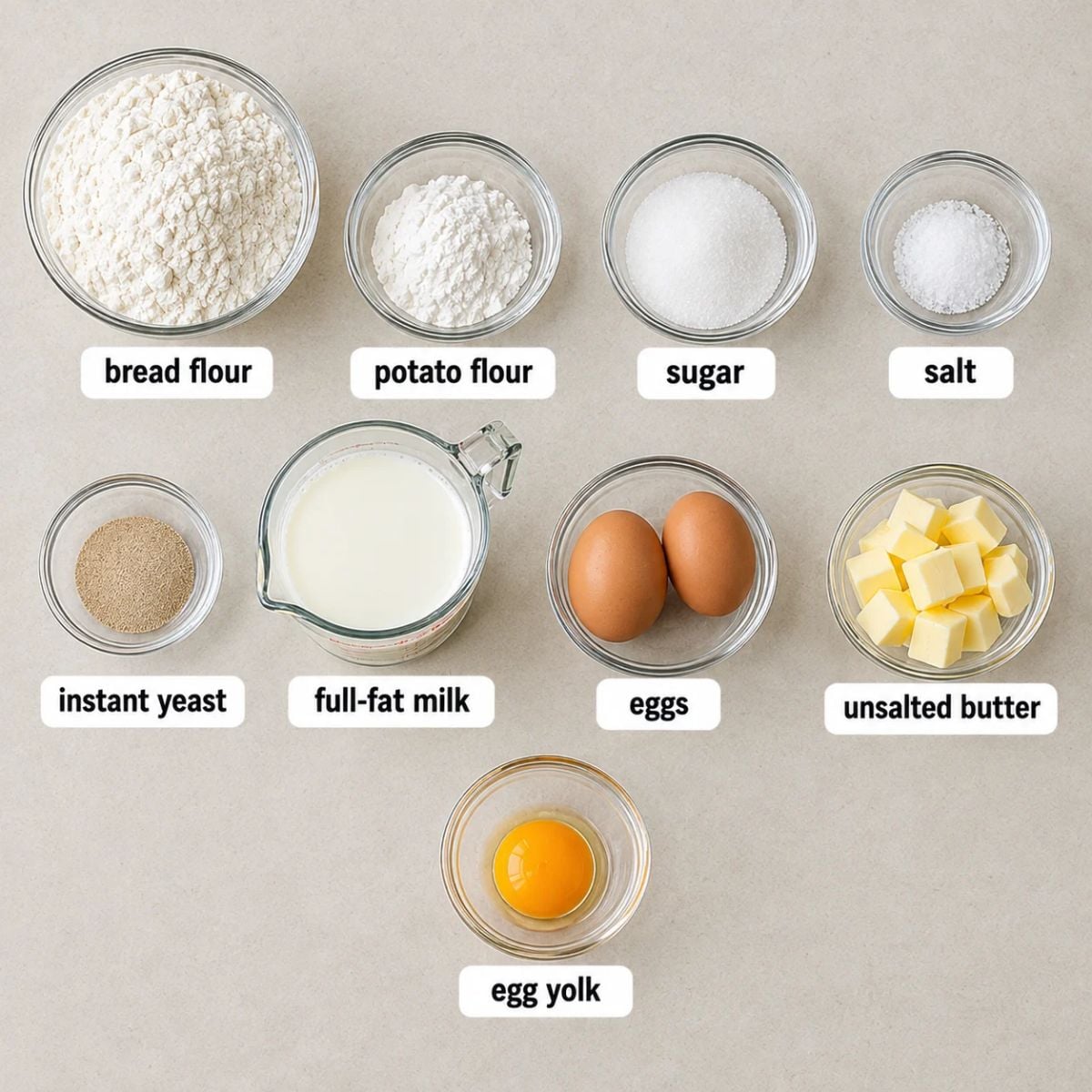
- Bread flour: I use bread flour because it gives yeast rolls the texture and chew I want. A flour with 12.5%–14.5% protein works well here.
- Potato flour: This is the ingredient that helps make these rolls so soft. It holds onto water in the dough, which gives the rolls a moist, tender crumb and helps them stay soft for days. You can also use potato starch or instant potato flakes. If using potato flakes, use 1 ¼ tablespoons.
- Instant yeast: I like instant yeast because I can add it directly to the flour without activating it first. Active dry yeast also works, but it needs to be mixed with warm milk and sugar first.
- Butter: Softened unsalted butter gets kneaded into the dough gradually, which gives the rolls a soft, rich texture.
- Egg wash: Egg yolk mixed with milk gives the rolls a golden brown finish before baking.
- Melted butter: Brushing the hot rolls with melted butter and covering them with a kitchen towel helps give them a super soft crust.
How to Make Homemade Dinner Rolls
1. Using an electric mixer fitted with a dough hook attachment, combine the flour, potato flour, sugar, salt, yeast, eggs, and milk, and knead on low speed until it comes together. Scrape down the sides of the bowl halfway through. Let rest for 20-30 minutes.
2. Knead on low speed and gradually add the butter until it is completely incorporated.
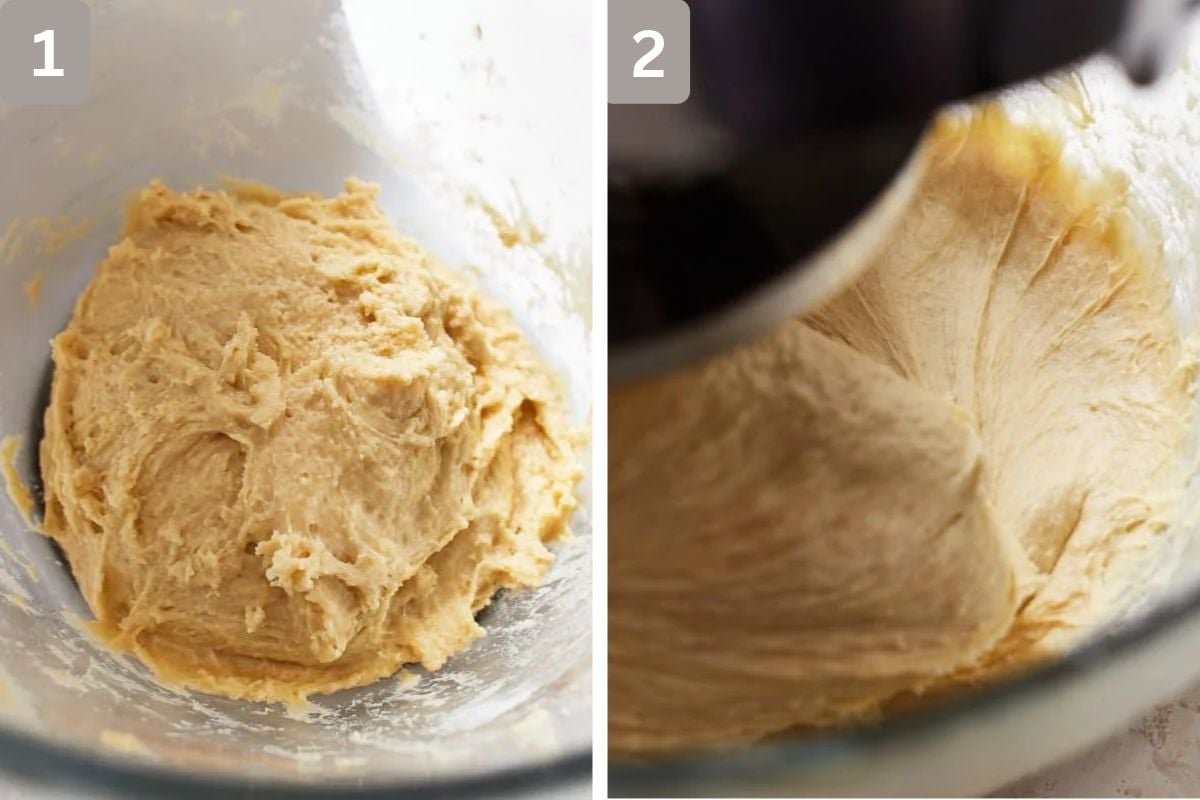
3. Once all of the butter is incorporated, increase the speed to high and knead until the dough is smooth, releases from the sides of the bowl, and passes the windowpane test.
How to do the windowpane test?
To do the windowpane test, let the dough rest for about 1 minute after mixing. Then take a small portion of the dough between your fingers and slowly stretch it until the center is very thin, and light can shine through without tearing. This means that you have kneaded and developed the dough sufficiently. If it doesn't pass the windowpane test and it tears, knead for 1-2 minutes longer.
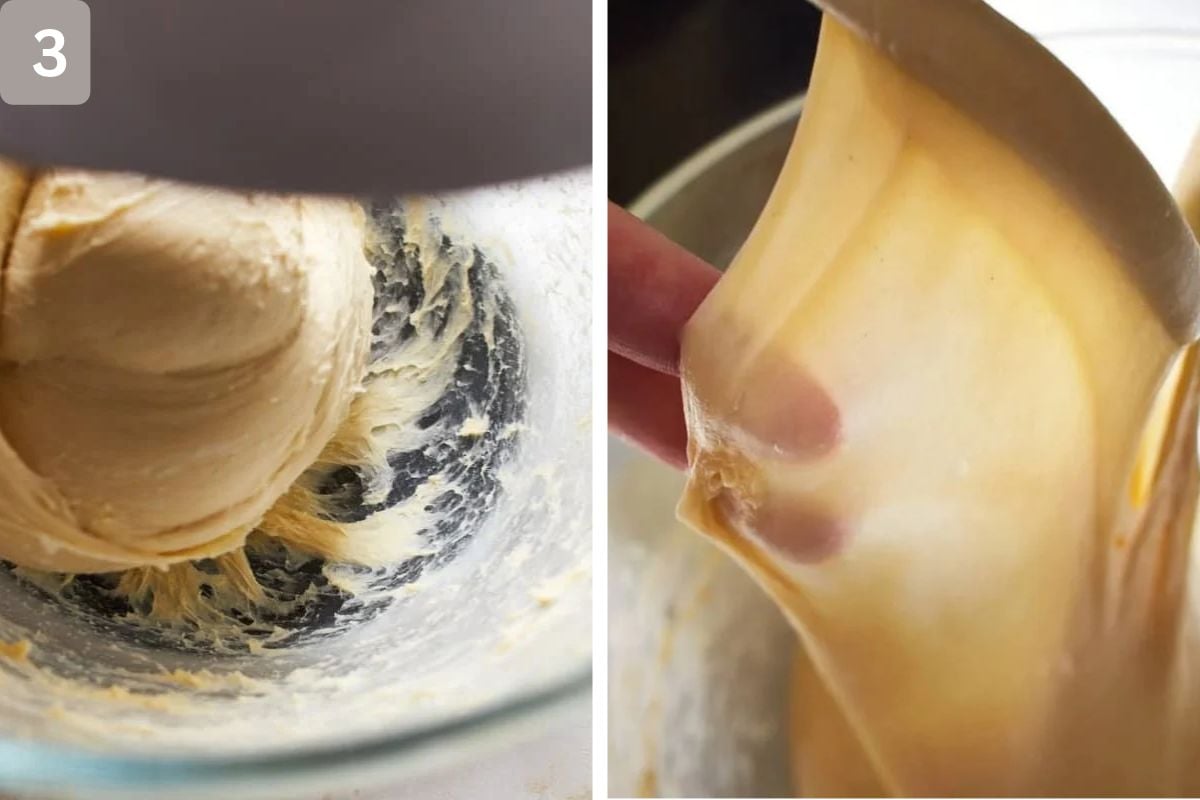
4. It's a very soft, smooth, and satiny dough that is slightly tacky to the touch.
5. Transfer the dough to a lightly oiled container, cover, and let rest until doubled.
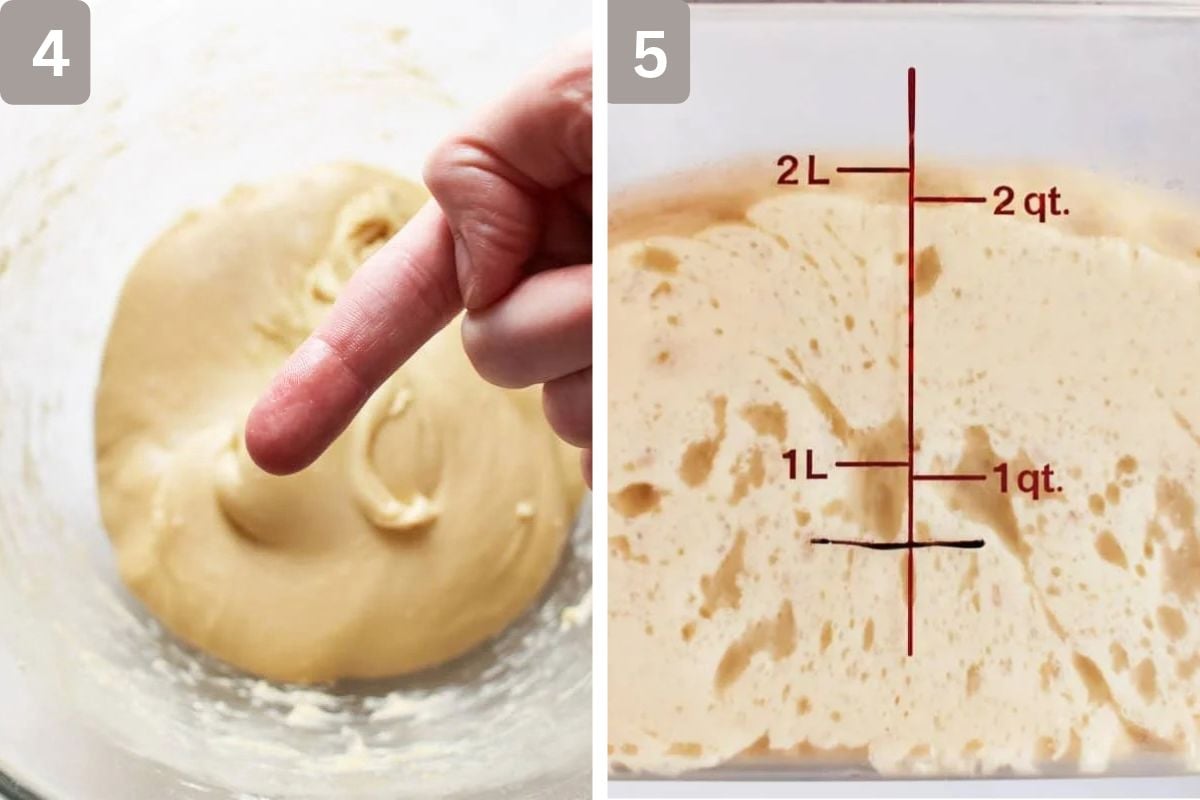
6. Roughly shape the dough into a square and divide it into 15 equal pieces.
Note: The following process is easier with both hands. Watch the video to see how I shape the rolls with both hands.
7. Apply a little oil to your fingers, take one piece of dough, roll it into a ball, and deflate it while you roll it up. Then stretch the dough up on the side farthest away from you...
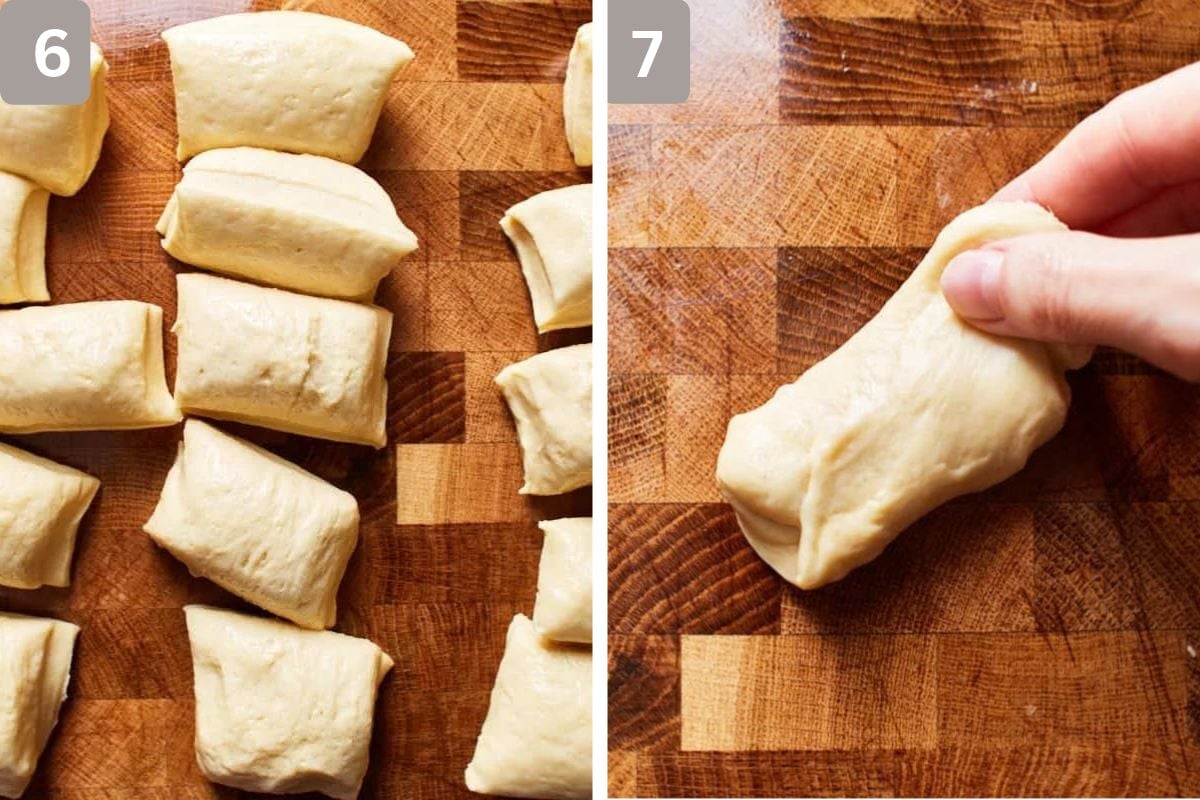
7. ...and fold over the center.
8. Then rotate the dough by about 45°, stretch the dough farthest away from you, and fold it over the previous fold and over the center. Repeat this 6-8 times. The goal is to have a round ball with all the seams on one side.
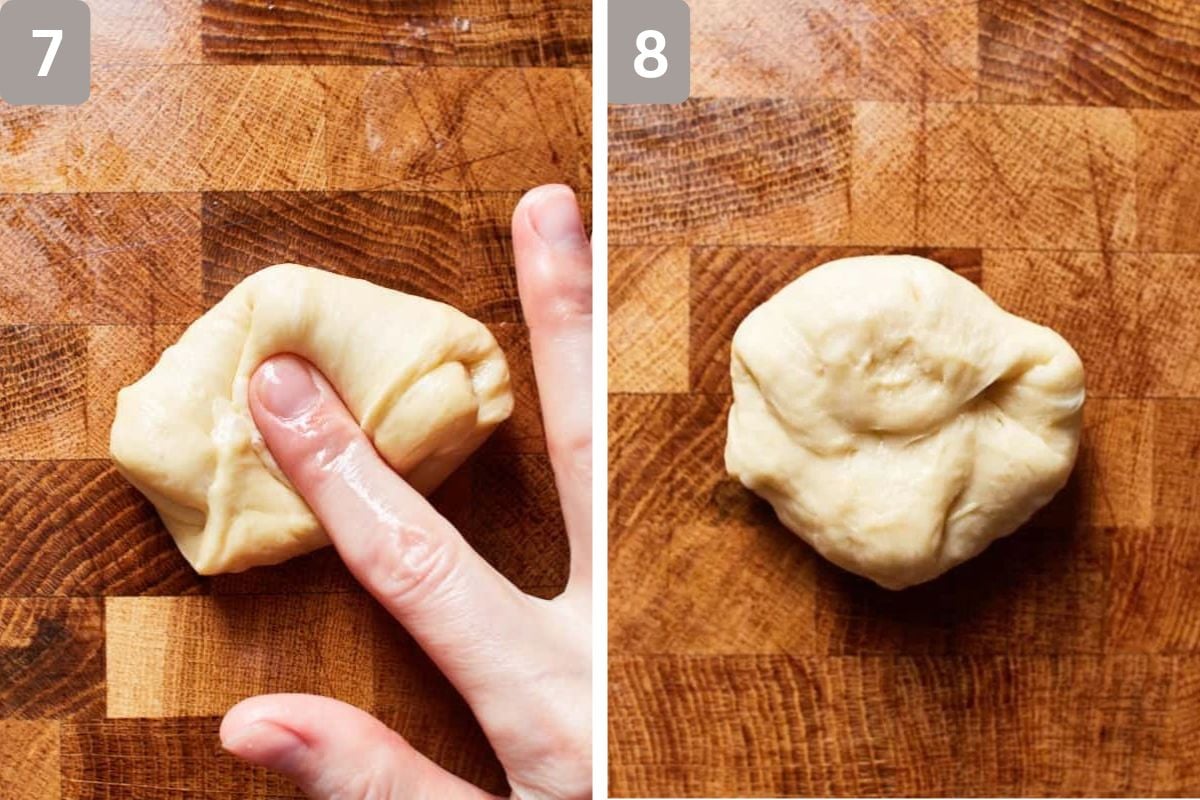
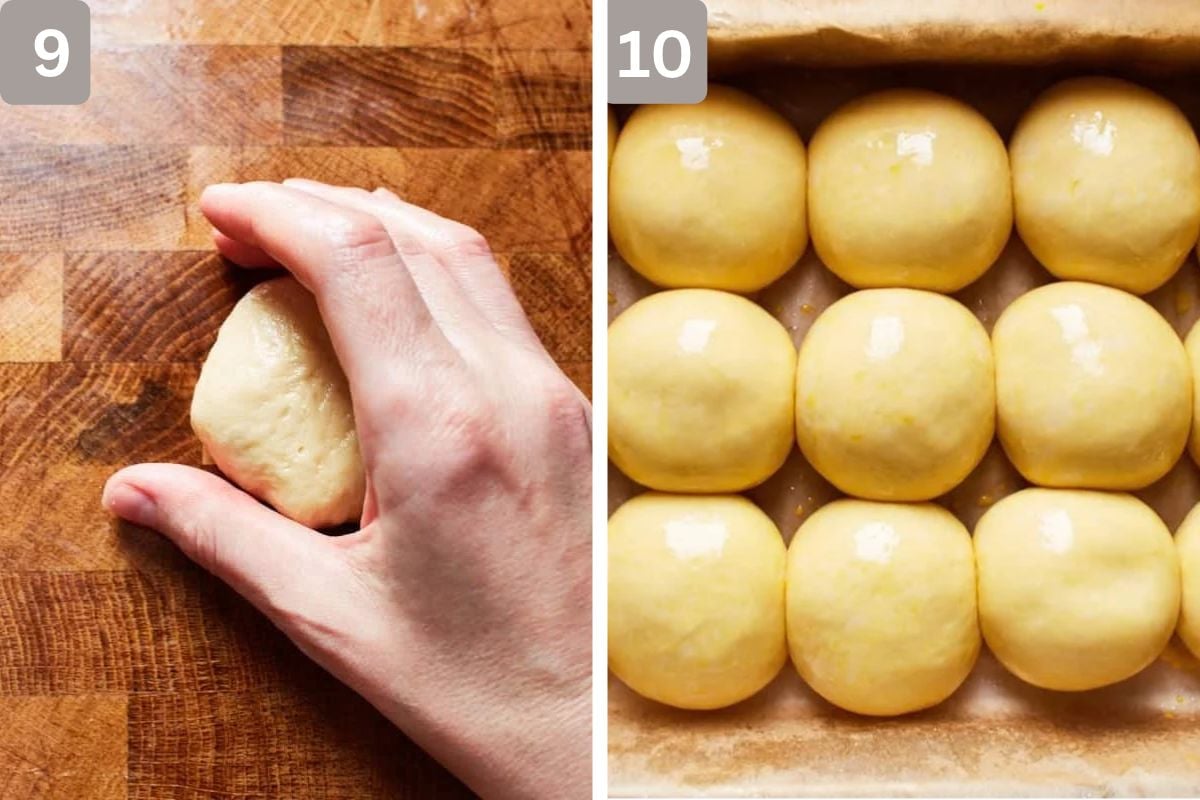
9. Then place the dough ball seam side down, gently cup it with one hand, and form a C-shape with your hand. Move the dough with your hand in a circular motion and gently press it against the work surface to build tension, stretch the surface of the dough, and close the seams at the bottom.
10. Arrange the dough balls in the prepared baking pan in 3x5 rows with the same distance between the individual dough balls. Let sit at room temperature for 45-90 minutes until they have doubled. Then brush with egg wash and bake.
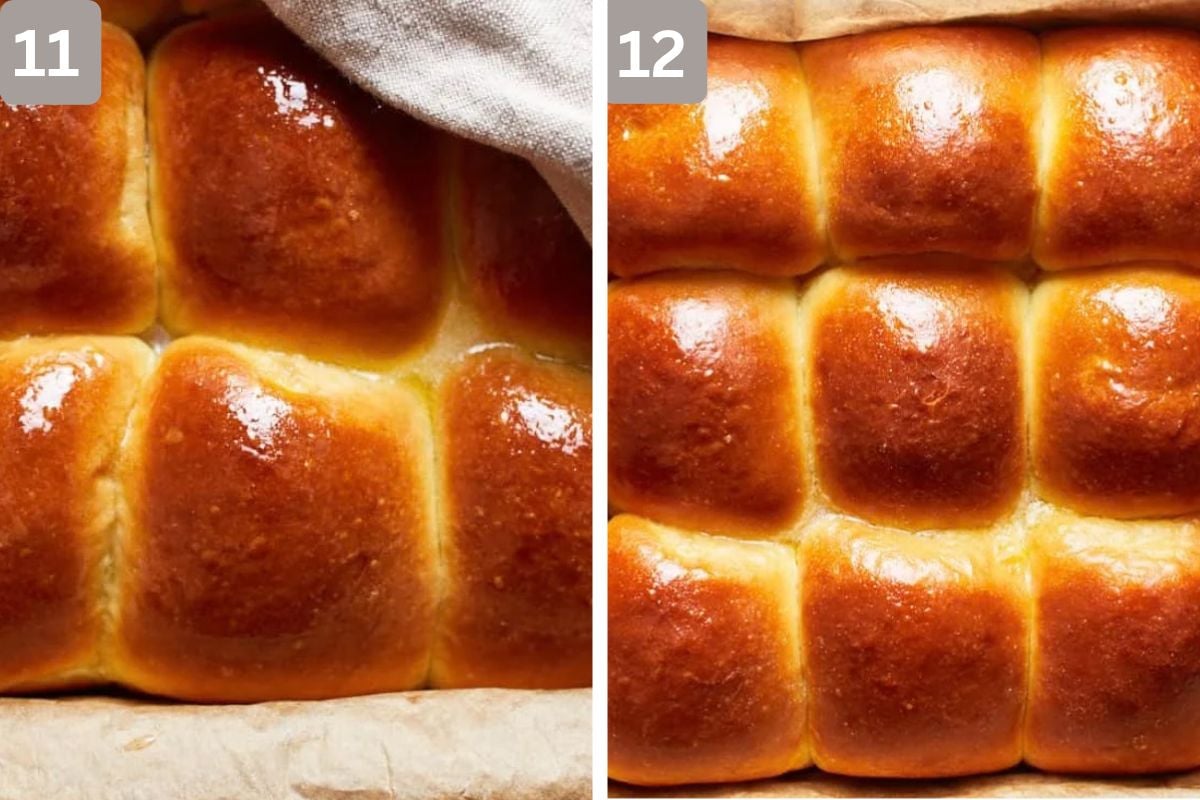
11. Remove from the oven, brush with melted butter, and cover with a clean and dry kitchen towel for 20 minutes. (Plastic wrap will make them sweat too much).
12. Then uncover and transfer to a cooling rack to cool completely.
Recipe Tips
- Use bread flour with 12.5%–14.5% protein for the best texture.
- If you use all-purpose flour instead, you may need 1–2 tablespoons more because it doesn’t absorb as much liquid as bread flour.
- Use oil on your hands and work surface when shaping the rolls instead of flour so you don’t work extra flour into the dough.
- Let the shaped rolls rise until they have doubled in size. Under-proofed rolls can turn out flat.
- Make sure the dough passes the windowpane test before moving on.
- As soon as the rolls come out of the oven, brush them with melted butter and cover them for 20 minutes. This helps keep the crust very soft.
- If the dough isn’t rising, check that your yeast is still active and give the dough a warmer environment if needed.
- Brush with garlic butter if you want a variation.
Don't know what to do with the egg white? How about angel food cake?
What Can You Serve With This?

- Thanksgiving turkey
- Your favorite sauces for dipping
- Hamburgers
- Cheeseburgers
- Slider fillings
- Stews
FAQs
Yes. Warm the milk to about 110°F (43°C), add the sugar and 2 ¼ teaspoons active dry yeast, and let it sit for 5–10 minutes until the surface starts to look foamy. Then continue with the recipe as directed.
Yes. Instead of refrigerating the dough overnight, let it rise at room temperature until doubled, which takes about 1–2 hours depending on the dough and room temperature. Then shape the rolls, let them rise a second time, and bake.



Recipe

Homemade Dinner Rolls Recipe
Ingredients
Yeast Dough
- 3 cups bread flour, spooned and leveled
- 1 tablespoon potato flour
- 3 tablespoon sugar
- 1 ¼ teaspoon salt
- 1 ¾ teaspoon instant yeast
- ¾ cup full-fat milk
- 2 large eggs
- 6 tablespoon unsalted butter, at room temperature
Egg wash
- 1 large egg yolk
- 1-2 tablespoon milk
Butter (for the baked buns)
- 2 tablespoon unsalted butter, melted
Instructions
Prepare the dough
- In a large bowl, using an electric mixer fitted with a hook attachment, add the flour, potato flour, sugar, salt, yeast, milk, and eggs, and knead on low speed until it comes together about 3-4 minutes. Scrape down the sides of the bowl halfway through. Let rest for 20-30 minutes.
- Knead on low speed and gradually add the butter until it is completely incorporated. Once all of the butter is incorporated, increase the speed to high and knead for about 4-6 minutes until the dough is smooth, releases from the sides of the bowl, and passes the windowpane test. It's a very soft, smooth, and satiny dough that is slightly tacky to the touch. If you find that you need to knead a few minutes longer to pass the windowpane test, give the dough a short break for a few minutes to avoid overheating the dough. Otherwise, the yeast could cripple.
- Lightly spray a straight-sided container with oil and transfer the dough to the container; lightly oil the top of the dough as well. Cover and let rest at room temperature for 10-20 minutes until it has grown by about 10-20%. Then put it in the refrigerator and let rest overnight, about 8-12 hours. It will at least double in this time.
Shape the rolls
- Remove the dough from the refrigerator and let it rest at room temperature for about 30 minutes.
- In the meantime, line a 9x13-inch (23-33cm) baking pan with parchment paper and lightly spray with oil. Set aside.
- Remove the dough from the container with a dough scraper and place it on a very lightly oiled work surface. Roughly shape the dough into a square and divide it into 15 equal pieces.
- Apply a little oil to your fingers, take one piece of dough, roll it into a ball, and deflate it while you roll it up. Then stretch up the dough on the side farthest away from you and fold over the center. Then rotate the dough by about 45°, stretch the dough farthest away from you and fold it over the previous fold and over the center. Repeat this 6-8 times. You will notice that the dough builds up tension and becomes firmer with every fold. The goal is to have a round ball with all the seams on one side.
- Then place the dough ball seam side down, gently cup it with one hand, and form a C-shape with your hand. Move the dough with your hand in a circular motion and gently press it against the work surface to build tension, stretch the surface of the dough, and close the seams at the bottom. If the dough is a bit sticky, oil your hands very lightly. Avoid using flour on the work surface to allow the dough to anchor to the surface as it moves. Do this gently without tearing the surface of the dough, and don't overwork the dough. Repeat with the remaining pieces of dough.
Let rise and bake
- Arrange the dough balls in the prepared baking pan in 3x5 rows with the same distance between the individual dough balls. Let sit at room temperature for 45-90 minutes until they have doubled.
- In the meantime, preheat the oven to 400°F (204°C) for 15-20 minutes.
- Brush the dough balls with egg wash and bake for 15-20 minutes until golden brown.
- Remove from the oven, brush with melted butter, and cover with a clean and dry kitchen towel for 20 minutes. Then uncover and transfer to a cooling rack to cool completely. Store in an airtight container at room temperature for up to 4 days.
Notes
Cooking Time and Temperature
Bake at 400°F (204°C) for 15–20 minutes until golden brown.Taste & Texture
Soft, fluffy, and tender with a light crumb and a soft crust. The potato flour helps keep the rolls moist and soft for days.Storage, Freezing & Reheating
- Room Temperature: Store cooled rolls in an airtight container for up to 4 days.
- Refrigerator: Shaped, unbaked rolls can be thawed overnight in the refrigerator before baking.
- Freezer: Freeze shaped, unbaked rolls for up to 2 months or baked rolls for up to 3 months.
- Reheat: Single rolls can be microwaved for 15–30 seconds, reheated in an air fryer for 1–2 minutes at 300°F (149°C), or wrapped in foil and reheated in the oven for about 5–10 minutes at 300°F (149°C). A whole pan of baked rolls can be wrapped in foil and heated at 300°F (149°C) for about 10–15 minutes. A whole pan of frozen, baked rolls can be heated at 300°F (149°C) for about 20–25 minutes.
Serving Recommendations
- Serve these rolls with Thanksgiving turkey or your favorite sauces.
- They also work well for hamburgers, cheeseburgers, and sliders.
Recipe Variations and Substitutions
- Use potato flour, potato starch, or instant potato flakes. If using potato flakes, use 1 ¼ tablespoons.
- If you don’t have bread flour, use all-purpose flour, adding 1–2 tablespoons more if needed.
- Active dry yeast can be used instead of instant yeast by activating it in warm milk with sugar first.
Proper Storage Tips
- Let the rolls cool completely before storing.
- Keep them in an airtight container at room temperature for up to 4 days.
- For longer storage, freeze baked rolls for up to 3 months.
- For make-ahead baking, freeze shaped unbaked rolls for up to 2 months.
Pro Tips
- Use bread flour with 12.5%–14.5% protein for the best texture.
- Use oil instead of flour when shaping the rolls.
- Let the shaped rolls double in size before baking.
- Make sure the dough passes the windowpane test.
- Brush the hot rolls with melted butter and cover them for 20 minutes to keep the crust soft.
Baker's Percentages
This is an enriched bread dough that means that milk, eggs, and butter are used, so it’s different from lean sourdough bread, which is just water, flour, and salt.| Ingredient | Weight | Percentage |
| Bread and Potato Flour | 386g | 100% |
| Sugar | 38g | 9.84% |
| Salt | 8g | 2.07% |
| Instant Yeast | 7g | 1.81% |
| Milk | 180g | 46.63% |
| Eggs | 120g | 31.09% |
| Unsalted Butter | 85g | 22.02% |
Video
You can find the video in the post above. If you don't see a video, please check your browser settings.
Leave a Reply