

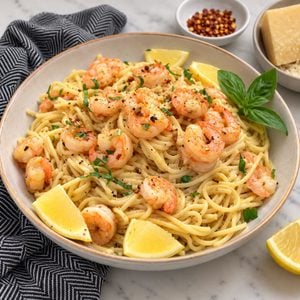
This shrimp scampi pasta is made in one deep pan on the stovetop, with garlic butter shrimp, lemon, and Parmesan stirred through the pasta at the end. The spaghetti simmers directly in the chicken stock, so the cooking liquid turns into the sauce instead of going down the drain.
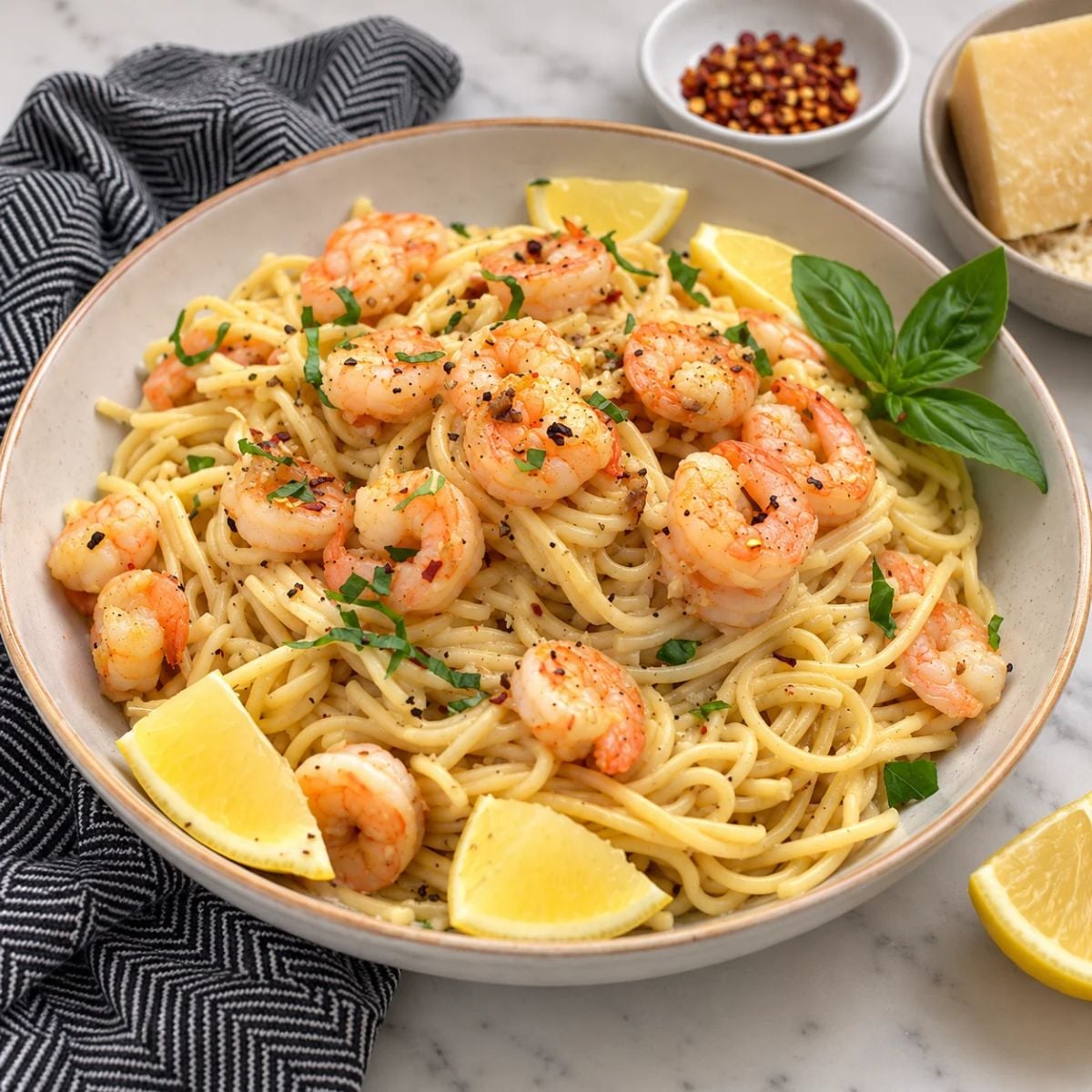
I make shrimp recipes on nights when I want something that tastes like a restaurant plate of pasta but only dirties one pan and a bowl. If you enjoyed my 33 Quick And Easy Dinner Recipes, this is another fast dinner worth keeping in the rotation. Keep reading to see how the sauce and accumulated juices come together for the perfect shrimp scampi spaghetti appetizer or main dish; no dry white wine is even needed.
Try This One-Pan Shrimp Scampi Spaghetti
I cook the shrimp first in butter and olive oil, then pull them out while the pasta cooks for the best flavor. All the browned bits they leave behind get scraped up into the stock, so the spaghetti takes on the garlic, lemon, and shrimp flavor as it softens.
The Parmesan is what pulls it together. Stirred in off the heat, it thickens the last of the stock into a buttery sauce that clings to the pasta. Traditional seafood pasta skips the cheese, but I like what it does here, and you can leave it out if you would rather keep things classic.
Why You'll Love It
- One pan: The shrimp, the pasta, and the sauce all happen in the same pot.
- Fast enough for a weeknight: From cold pan to plated pasta takes about 35 minutes.
- Nothing is drained: The stock becomes the sauce, so all that garlic and lemon flavor stays in the dish, without having to drain pasta.
- Bright and buttery: Lemon zest and juice keep the butter and Parmesan from feeling heavy.
- Easy to scale back: It serves four generously and halves cleanly if you are cooking for two.
Ingredients
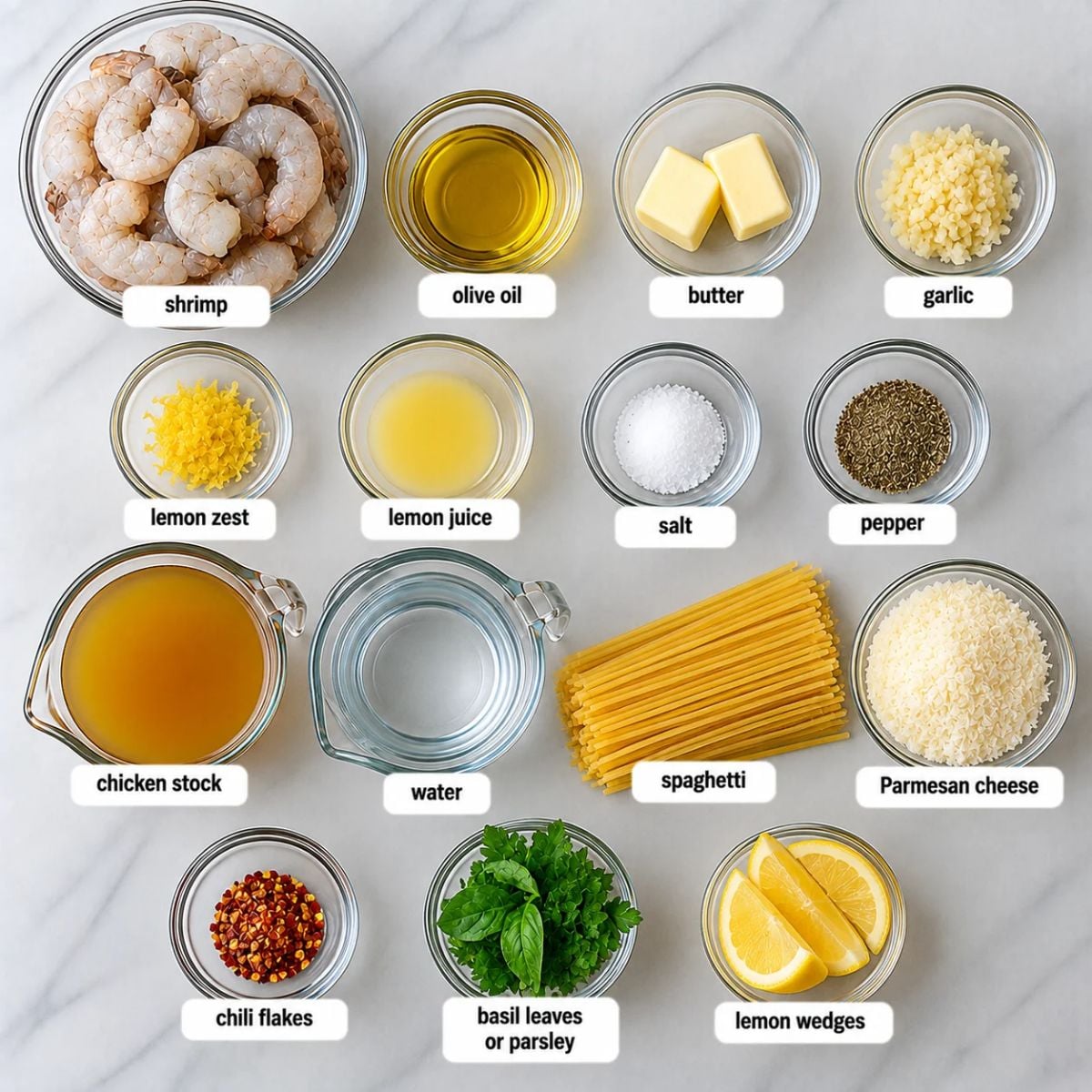
- Shrimp: I use large shrimp (raw) that are already peeled and deveined so they cook in a couple of minutes without any fuss. Pre-cooked shrimp are a poor swap because they turn rubbery the moment they hit a hot pan.
- Butter: Butter is what makes this taste like scampi, and it also carries the garlic and lemon into the pasta. All olive oil would work mechanically, but the sauce loses the rounded, creamy finish.
- Garlic: Freshly minced cloves soften in the butter and perfume the whole pan in under a minute. Garlic powder dissolves into the stock and tastes flat next to the real thing.
- Lemon zest and juice: The zest holds the perfume and the juice brings the acidity, so I use both from the same lemon. Bottled juice alone tastes dull and gives you nothing aromatic to balance the butter.
- Chicken stock: The spaghetti cooks in the stock and soaks up salt, herbs, and savory flavor as it softens. Plain water will cook the pasta just fine, but the finished sauce tastes thin.
- Spaghetti (about 10 ounces): I break the strands in half so they fit under the liquid in the pan and cook evenly. Very thin spaghetti or noodles overcooks quickly in a small amount of liquid, and linguine and fettuccine takes longer to cook, so standard spaghetti is the safer choice instead of substitutions.
- Parmesan cheese: Grated Parmesan melts into the last of the stock and thickens it into a glossy sauce. Pre-shredded cheese is coated to stop clumping and tends to stay grainy instead of melting smoothly.
How to Make Shrimp Scampi Spaghetti
1. Pat the shrimp dry with paper towels. Dry shrimp sear instead of steaming in their own liquid.
2. Set a deep, large skillet or Dutch oven over medium-high heat. Add the extra-virgin olive oil and 2 tablespoons of butter and let the butter melt and foam.
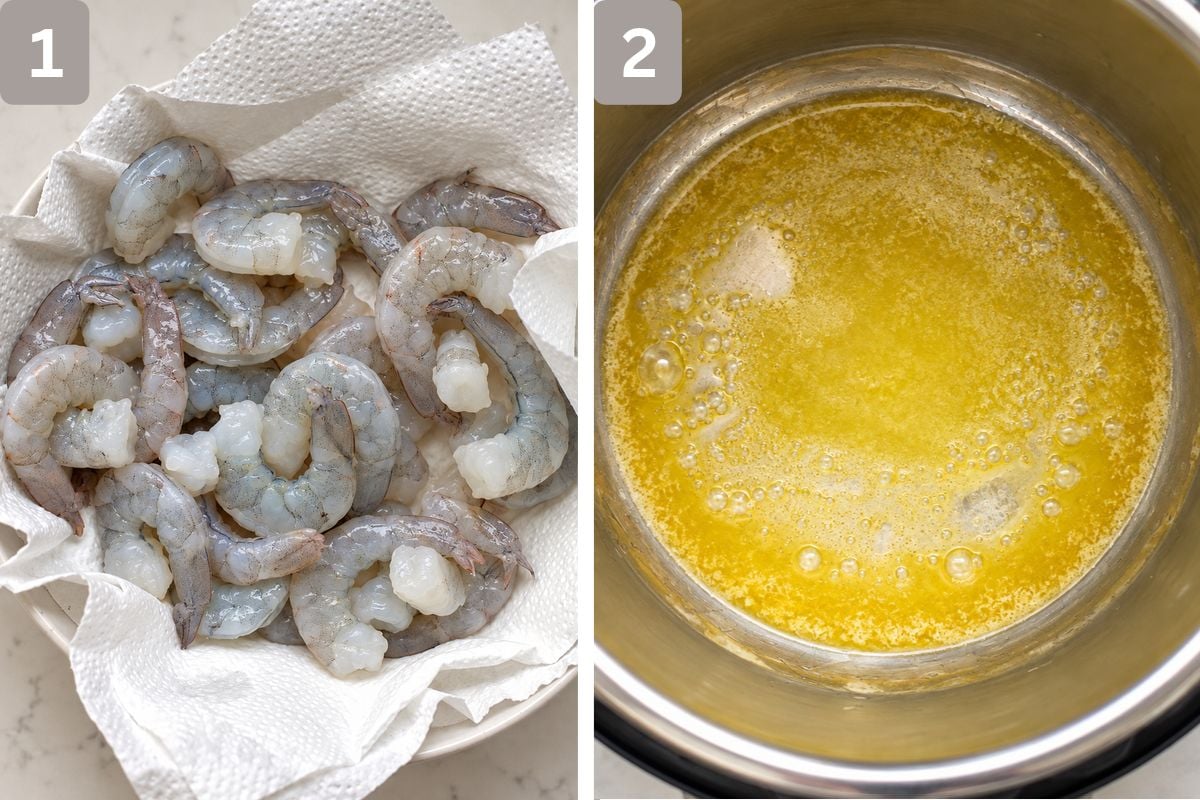
3. Add the shrimp in a single, even layer while sautéing for about 2 minutes, stirring once, until they are pink and almost opaque in the center. They finish cooking later in the hot pasta.
4. Add the 2 minced garlic cloves, lemon zest, lemon juice, salt, and black pepper. Stir for about a minute, then transfer the shrimp and all their juices to a bowl, leaving the browned bits in the pan.
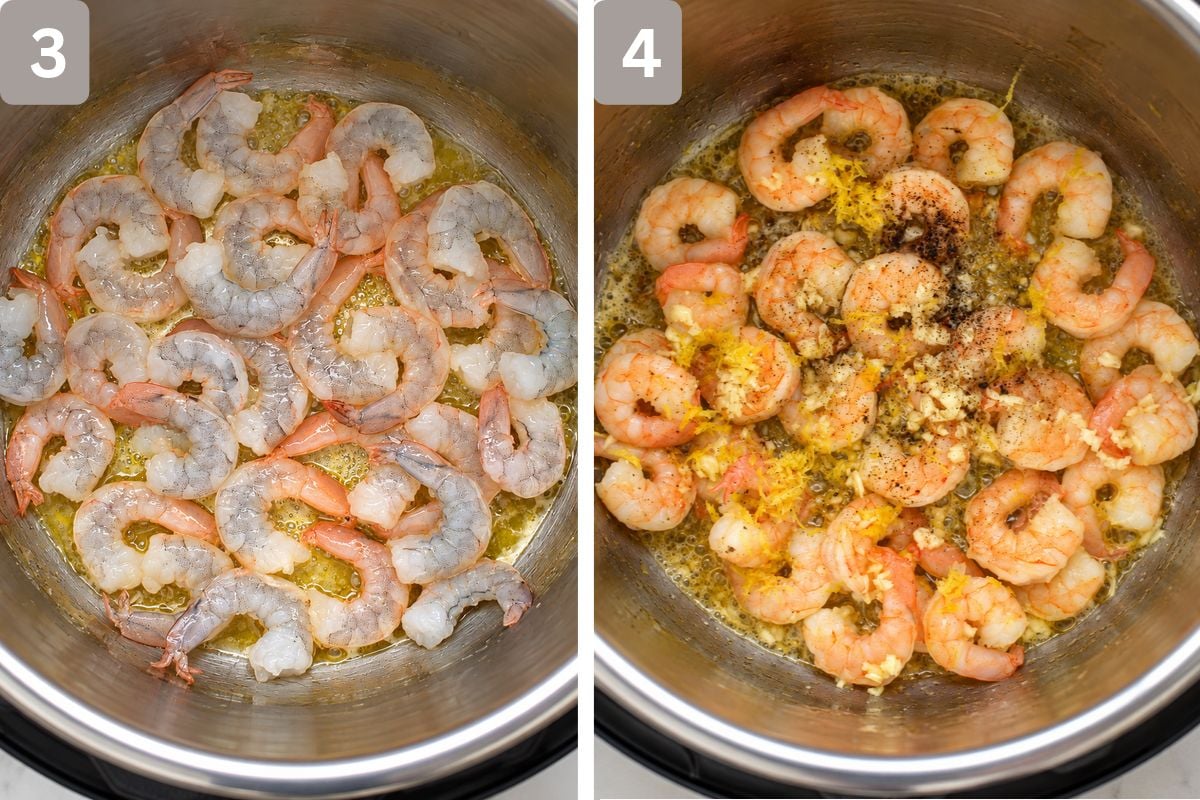
5. Pour in the chicken stock and scrape the bottom of the pan with a spatula so every bit of shrimp and garlic lifts into the liquid.
6. Add the broken spaghetti, layering the halves in different directions so the strands do not clump into one bundle.
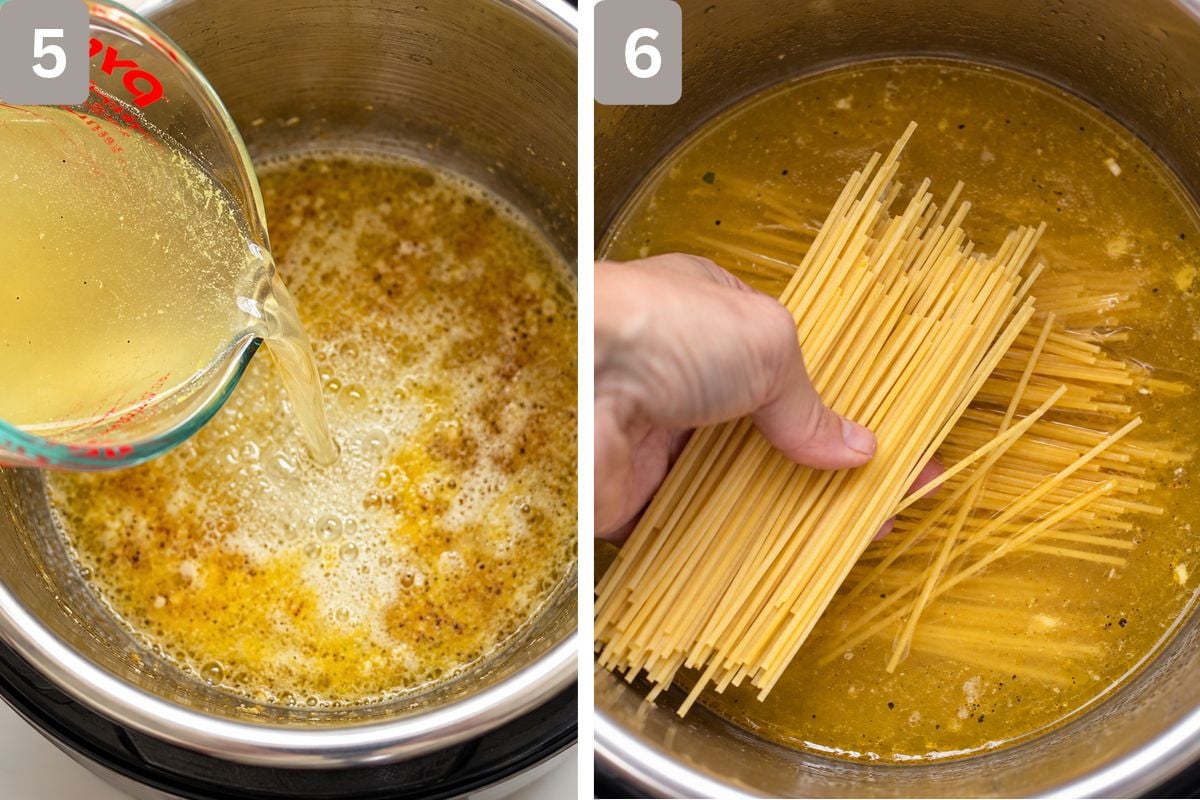
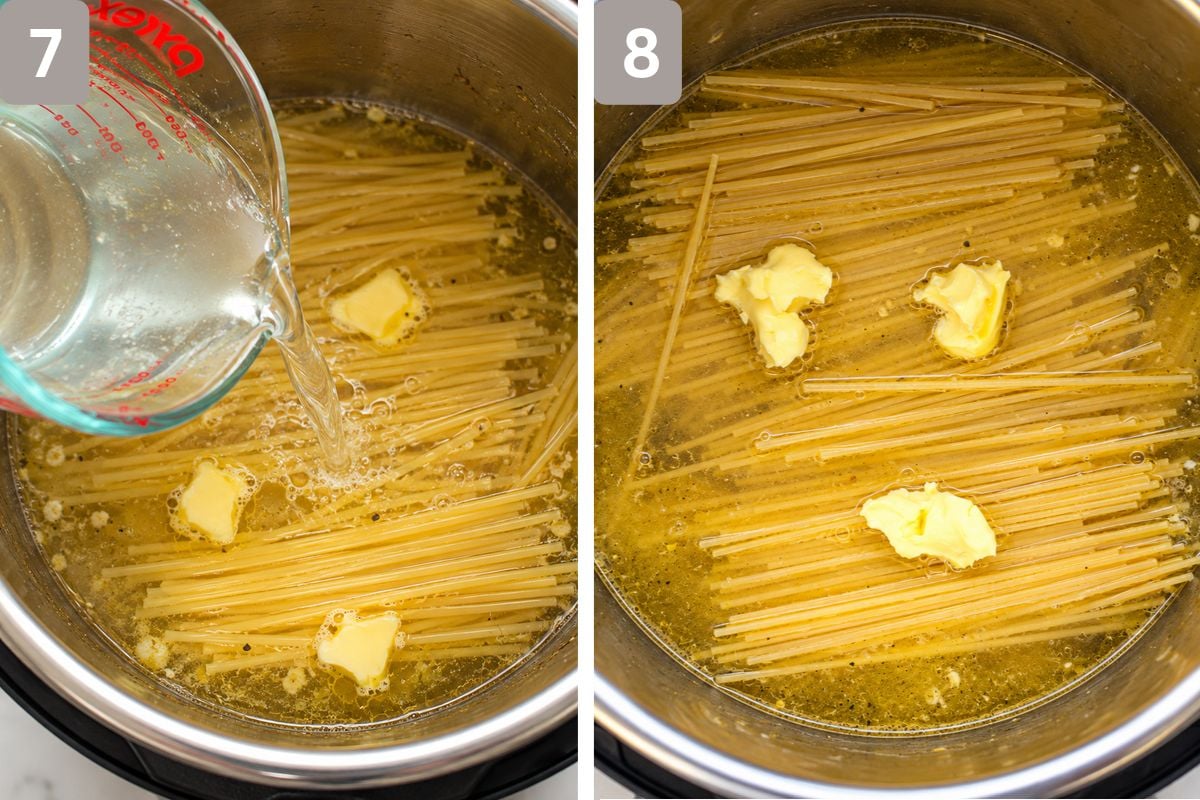
7. Pour the water over the top, add the remaining minced garlic clove, and drop the last tablespoon of unsalted butter on the pasta for the garlicky sauce. Press the spaghetti down until it is covered by liquid and bring it to a lively simmer.
8. Simmer for 10 to 12 minutes, stirring frequently and resting the lid on the pan between stirs to slow evaporation, until the pasta is al dente and only a little loose liquid is left. Add a splash of hot water whenever the pan looks dry.
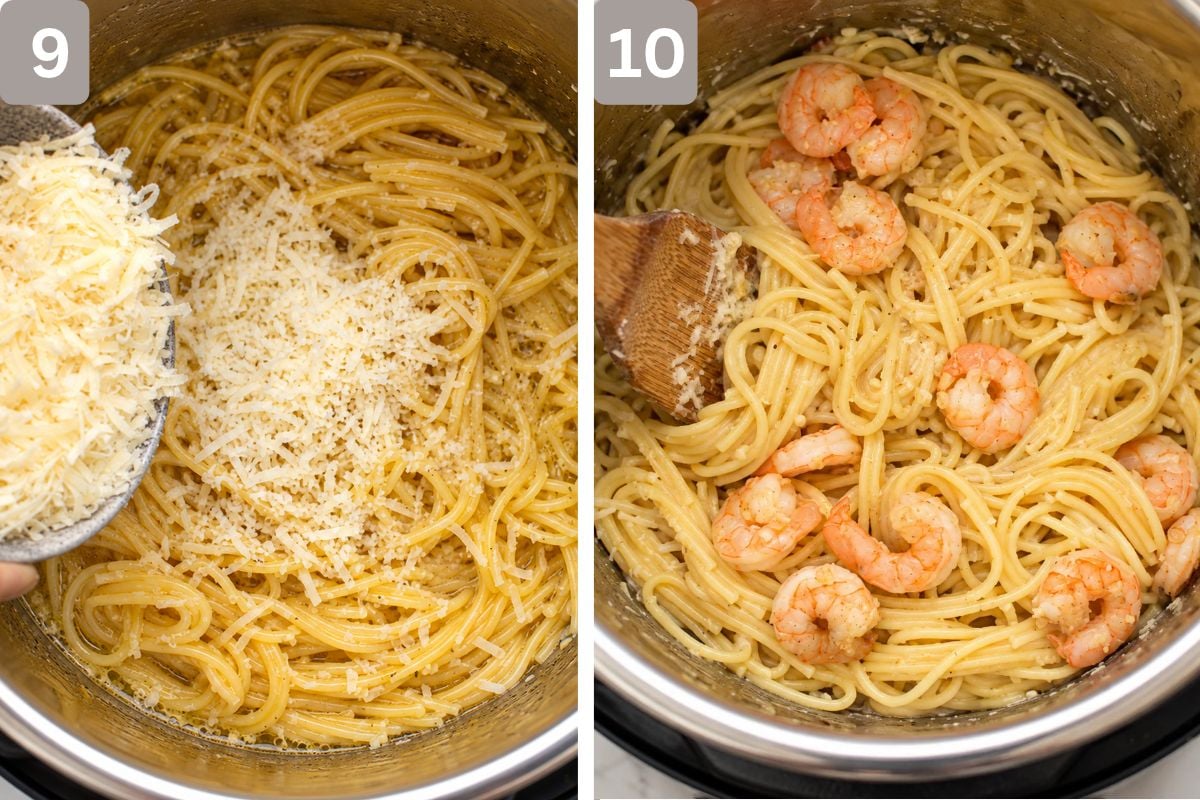
9. Take the pan off the heat and sprinkle in the Parmesan, tossing until it melts into the remaining liquid and coats the strands, making the scampi sauce.
10. Return most of the shrimp with their juices and add the chili flakes. Stir through so the residual heat warms the shrimp and finishes them without toughening them.
11. Let the pasta stand for 2 minutes so the sauce thickens, then serve with the reserved shrimp on top, basil or fresh parsley leaves, and lemon wedges.
Cooking Tips
- Use a wide, deep pan so the broken spaghetti lies flat under the liquid.
- Dry the shrimp well before they go into the butter, or they will poach instead of browning.
- Pull the shrimp out as soon as they turn pink, because they finish cooking later in the hot pasta.
- Scrape the bottom of the pan hard when the stock goes in, since that fond is most of the flavor.
- Stir the pasta often, as it is cooking in much less liquid than a big pot of boiling water.
- Keep a mug of hot water nearby and add splashes if the pan dries out before the pasta is tender.
- Taste the spaghetti at 10 minutes and stop while it still has a little bite.
- Add the Parmesan off the heat so it melts smoothly instead of turning stringy.
- Serve the juicy shrimp pasta dish straight away, because this sauce tightens quickly as it sits.
- Some like to add red pepper flakes, ground pepper, clams, chives or onions, shallots, or more. I find this recipe suits my taste buds the best, so I don't need all the extras.
What Can You Serve With This?
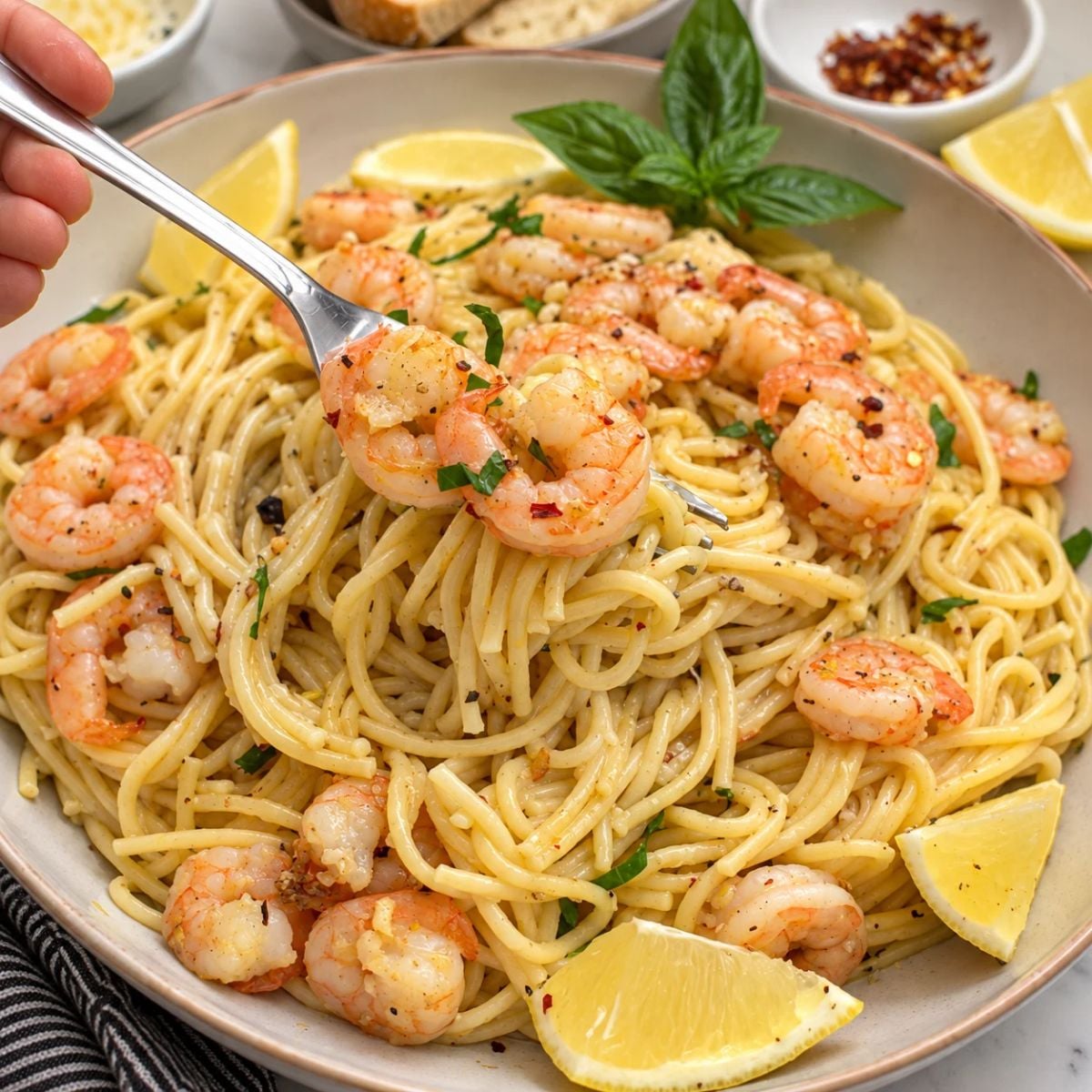
- Garlic crusty bread
- Green salad
- Roasted asparagus
- Steamed broccoli
- Sautéed zucchini
- Lemon wedges or fresh lemon juice
- A glass of sauvignon blanc
FAQs
Yes. Thaw them in a bowl of cold water for 15 to 20 minutes, or overnight in the fridge, then pat them very dry before they go into the pan.
There is only a small amount of liquid in the pan, so the starch settles fast. Stir every minute or two and keep the heat at a steady simmer rather than a hard boil.
Stir in a few extra splashes of hot stock or water after the Parmesan goes in. The pasta keeps absorbing liquid as it stands, so a little extra is never wasted.
You can. The sauce will be thinner and more like a classic scampi, so simmer the pasta until slightly less liquid is left in the pan.



Recipe
Shrimp Scampi Pasta
Ingredients
For sauteing the shrimp
- 8-10 oz shrimp raw, peeled, and deveined (we use frozen, defrosted shrimp)
- 1 tablespoon olive oil
- 2 tablespoon butter
- 2 garlic cloves, minced
- 1 teaspoon lemon zest (½ lemon)
- 2 tablespoon lemon juice (½ lemon)
- ½ teaspoon salt
- ½ teaspoon pepper
For cooking spaghetti
- 2 cups chicken stock
- 1 cup water
- 12 oz spaghetti broken in halves, 340 grams
- 1 garlic clove, minced
- 1 tablespoon butter
To finish
- 1 cup Parmesan cheese grated
- ¼ teaspoon chili flakes
- Basil leaves or parsley
- Lemon wedges
Instructions
- Pat the shrimp dry with paper towel.
- Heat the olive oil and 2 tablespoons of butter in a large, deep skillet or Dutch oven over medium-high heat until the butter foams.
- Add the shrimp in a single layer and cook for about 2 minutes, stirring once, until pink and almost opaque in the center.
- Add the 2 minced garlic cloves, lemon zest, lemon juice, salt, and pepper and stir for 1 minute. Transfer the shrimp and their juices to a bowl, leaving the browned bits in the pan.
- Pour in the chicken stock and scrape the bottom of the pan with a spatula to lift all the browned bits into the liquid.
- Add the broken spaghetti, layering the halves in different directions.
- Pour the water over the top, add the remaining minced garlic clove and the last tablespoon of butter, and press the pasta down until it is covered. Bring to a lively simmer.
- Simmer for 10 to 12 minutes, stirring frequently and resting the lid on the pan between stirs, until the pasta is al dente and only a little loose liquid remains. Add a splash of hot water if the pan dries out.
- Off the heat, stir in the Parmesan until it melts into a smooth sauce.
- Return most of the shrimp with their juices, add the chili flakes, and stir through until the shrimp are hot and fully opaque.
- Let the pasta stand for 2 minutes, then serve topped with the remaining shrimp, basil or parsley, and lemon wedges.
Notes
Cooking Time and Temperature
Sear the shrimp over medium-high heat for about 2 minutes, then 1 more minute with the garlic and lemon. They should be pink and almost opaque in the center and will finish cooking through in the hot pasta. Simmer the spaghetti for 10 to 12 minutes over medium heat, stirring frequently and resting the lid on the pan between stirs, until al dente. Thinner spaghetti can be done in 8 to 9 minutes, so taste early.Taste & Texture
This shrimp scampi spaghetti is buttery, garlicky, and bright from the lemon. The pasta absorbs the seasoned stock as it simmers, and the Parmesan thickens what is left into a glossy sauce that coats every strand.Recipe Variations and Substitutions
- Cheese: Leave the Parmesan out for a more traditional seafood pasta, and simmer the pasta until slightly drier.
- Pasta: Linguine or fettuccine work in place of spaghetti; follow their package time as a guide.
- Heat: Skip the chili flakes for kids and serve them on the side.
- Herbs: Parsley keeps it classic, basil makes it a little sweeter.
Storage, Freezing & Reheating
- Fridge: Store leftovers in an airtight container for up to 2 days.
- Freezer: Not recommended, as the shrimp and the sauce both suffer once thawed.
- To Reheat: Warm gently in a pan over medium-low heat with a few splashes of stock or water to loosen the pasta.
Serving Recommendations
I serve this straight from the pan while the sauce is still loose. Warm garlic bread takes care of whatever is left in the bowl, and a green salad with a sharp vinaigrette balances the butter.Proper Storage Tips
- Let the pasta cool before transferring it to an airtight container.
- Refrigerate within 2 hours.
- Keep the shrimp mixed into the pasta so they do not dry out.
- Reheat only once, and only until hot throughout.
Pro Tips
- Use a wide, deep pan so the broken spaghetti sits under the liquid.
- Dry the shrimp well so they brown instead of steaming.
- Scrape up the browned bits before the pasta goes in; that is where the flavor is.
- Stir often and top up with hot water as needed.
- Add the Parmesan off the heat for a smooth sauce.
You can find the video in the post above. If you don't see a video, please check your browser settings.
Leave a Reply