

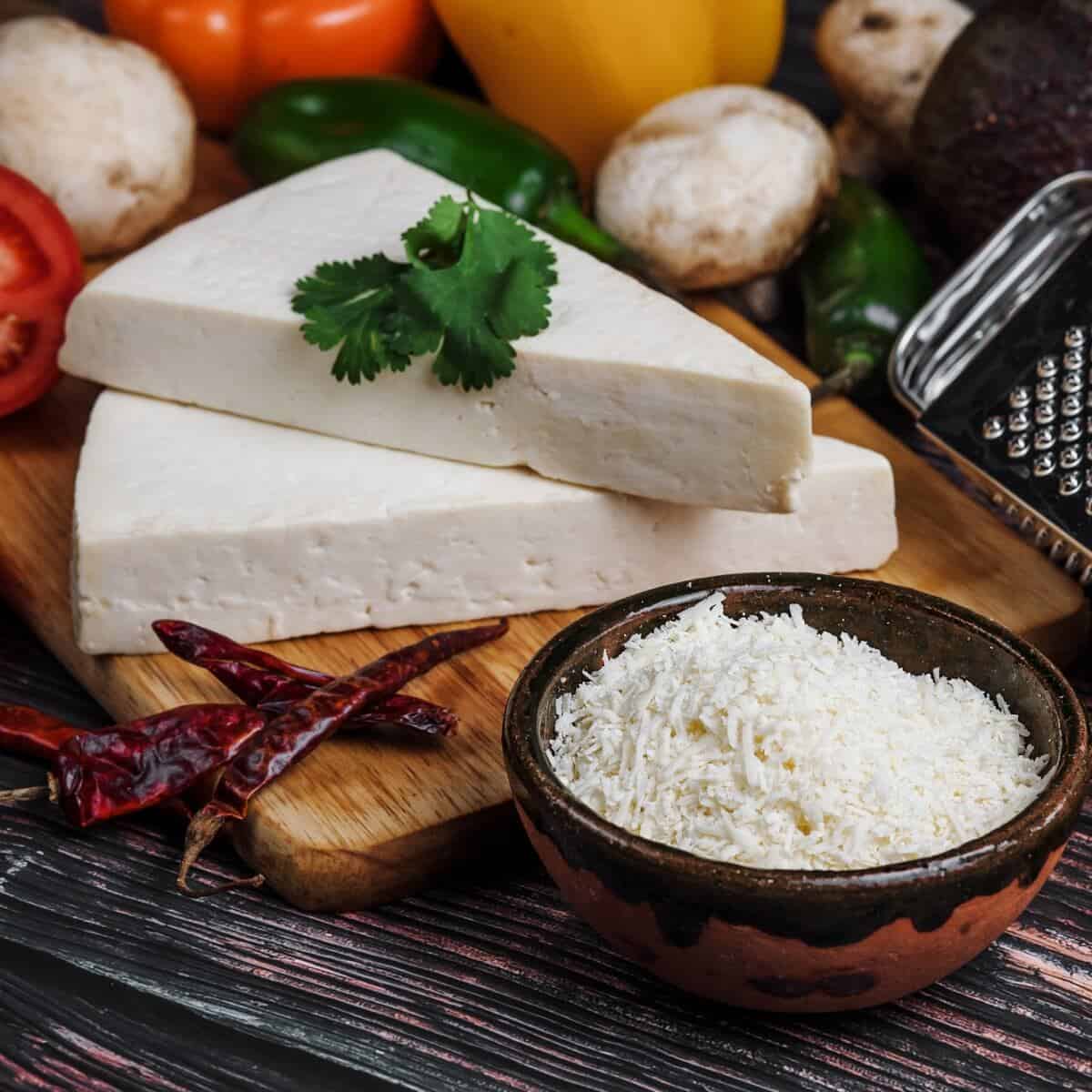
Say cheese, because today, we're exploring alternatives to the beloved Cotija cheese!
While nothing quite matches its crumbly texture and salty kick, fear not, cheese lovers, for there's a secret weapon in the world of substitutes: feta cheese.
But hold your taste buds in anticipation, feta cheese is by far not the only Cotija cheese substitute you can use! Perhaps you are looking for a less crumbly option, or simply want to change things up a bit. Grab your grator because I'm about to uncover a range of delectable options that'll have you saying cheese in no time!
6 Best Cotija Cheese Substitutes
Yes, it might seem easy to substitute Cotija cheese in your recipes because of the number of cheese products available in your local grocery stores.
Trust me; I have experimented with a few, but not all of them have worked as well as the following cheese products:
1. Feta Cheese
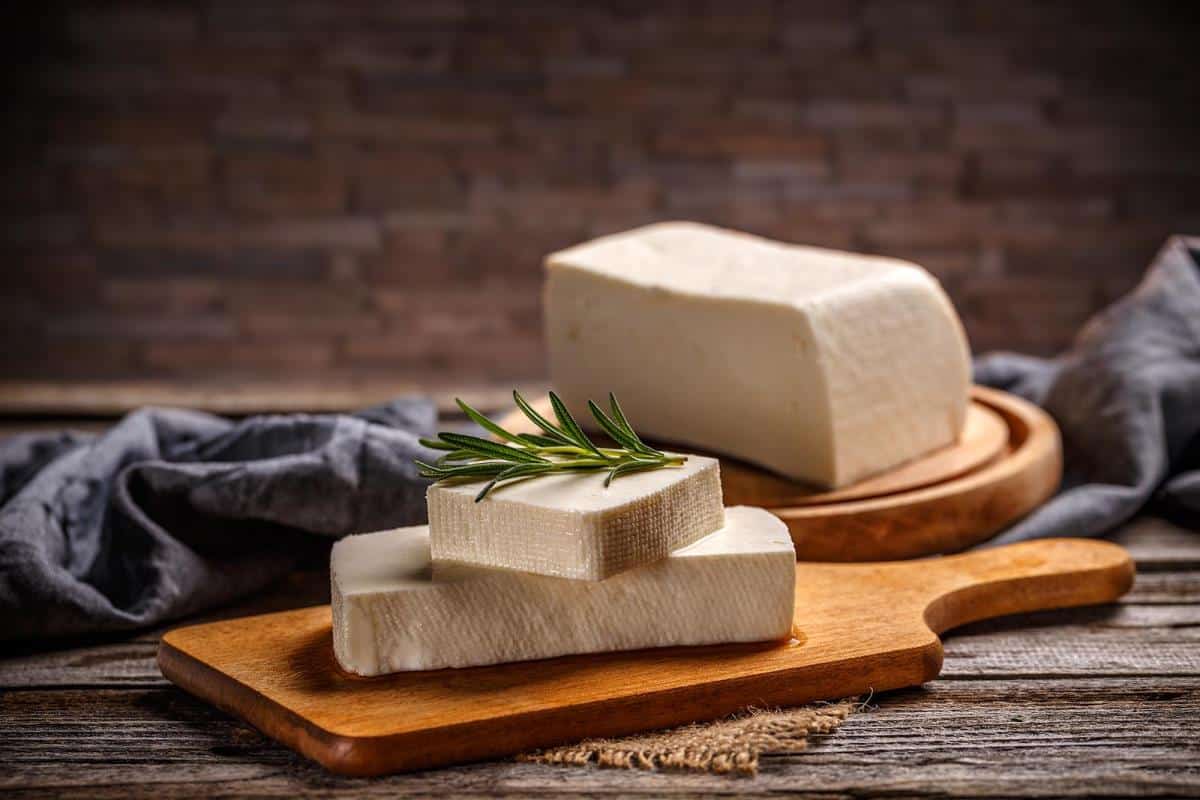
If you're in a rush and need a low-calorie type of cheese, the substitute for Cotija cheese that you can easily find is feta cheese; in fact, some of you might already have it in your fridge.
It's made from goat's milk, sheep's milk, or a combination of the two, so it has a more pungent flavor and aroma than Cotija cheese. You can use feta cheese as a substitute for cotija cheese using a 1:1 ratio.
Best for: Feta cheese is ideal as a substitute for cotija cheese for salads, pastas, and Mediterranean dishes, offering a tangy flavor and crumbly texture that resembles Cotija cheese's salty kick.
2. Parmesan Cheese
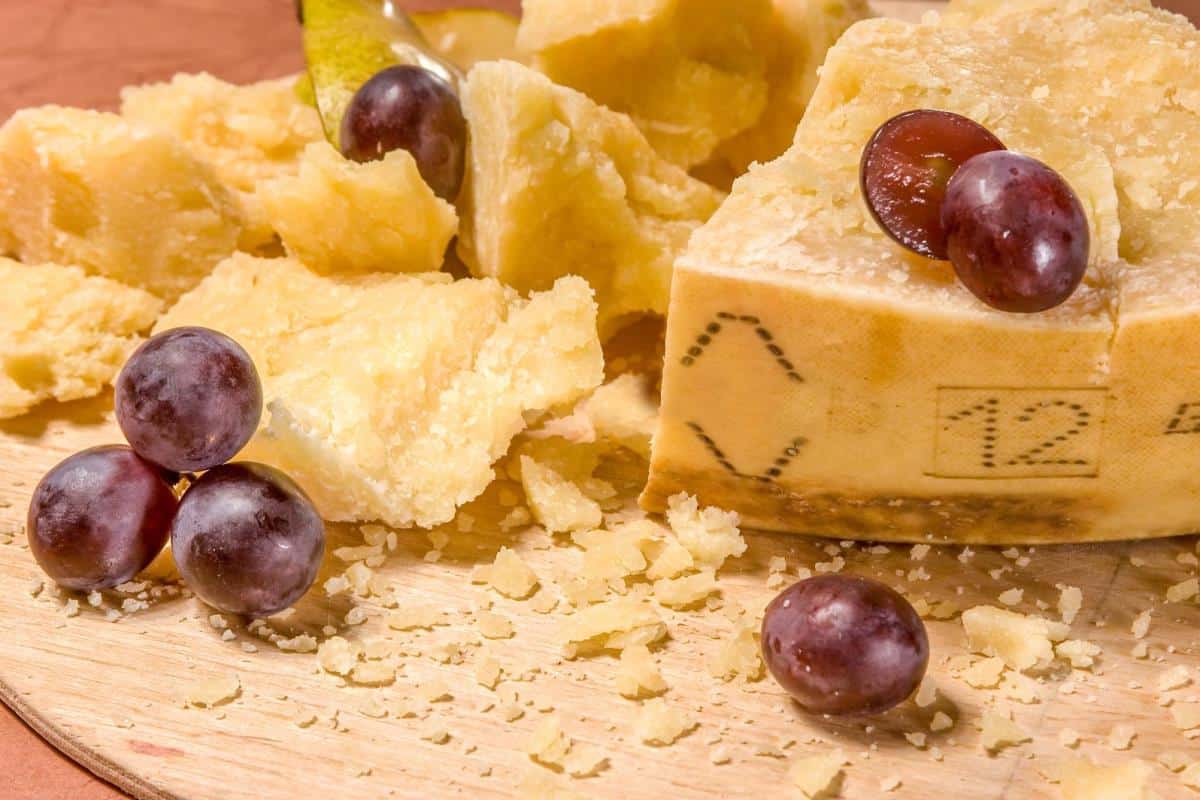
There is no denying that this salty Italian cheese is one of the most popular, and is a favorite of both home cooks and professional chefs. So, it wouldn't be surprising to know that most of you already have parmesan cheese in your pantry or fridge.
Plus, if you need a vegan Cotija cheese substitute, you can find vegan parmesan cheese products in your local grocery stores or health stores.
Whether you have a block of parmesan cheese or its grated or pre-sliced variety, it's one of my highly recommended substitutes for aged Cotija cheese. After all, parmesan cheese is also an aged cheese product.
The aging process is the reason why it has low lactose content. In small quantities, parmesan cheese won't upset the stomach of your lactose-intolerant loved ones.
As a type of hard cheese, I suggest grating the parmesan cheese and putting it in your food processor to turn the shaves or grates of cheese into fine crumbles. If you already have the sliced or grated variety, allow the cheese to air dry for a few minutes before placing it in your food processor.
Since parmesan is tangier and saltier than Cotija cheese, gradually add it to your recipe. I recommend starting with half the amount of Cotija cheese required in your recipe and just adding small quantities as and when needed.
Best for: Parmesan cheese, with its nutty flavor and granular texture, is perfect as a Cotija cheese substitute for grating over pasta, salads, and soups.
3. Queso Fresco
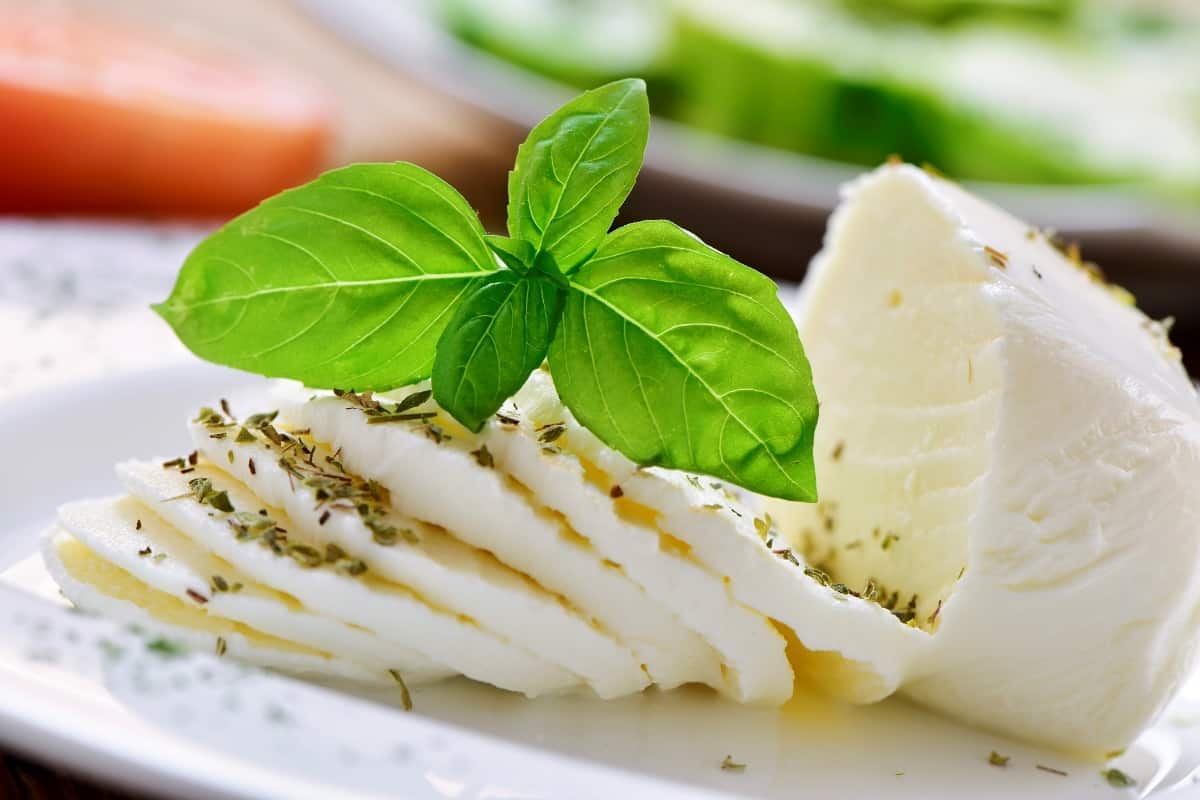
Queso fresco is Mexican cheese I consider Cotija's cousin because of its salty flavor, milky flavor, and crumbly texture. I highly suggest opting for queso fresco made from pure cow's milk.
But, of course, there's nothing wrong with using queso fresco made from pure goat's milk and a combination of goat's milk and cow's milk.
While queso fresco has a milder flavor, it won't disappoint, as you can use it as a topping, garnish, and filling, add it to your dishes, dips, and sauces requiring creaminess, and even eat it fresh.
You can substitute Cotija cheese with the same amount of queso fresco, but you can also add more if you want, thanks to its milder saltiness and milkiness.
One thing to keep in mind when using queso fresco is it's a more acidic type of cheese. I suggest reducing the amount of acidic ingredients, such as tomato and lime juice, when using queso fresco.
Best for: Queso fresco, with its mild flavor and crumbly texture, is a great substitute for Cotija cheese. It adds a fresh, creamy element to salads, tacos, and Mexican dishes.
4. Cottage Cheese
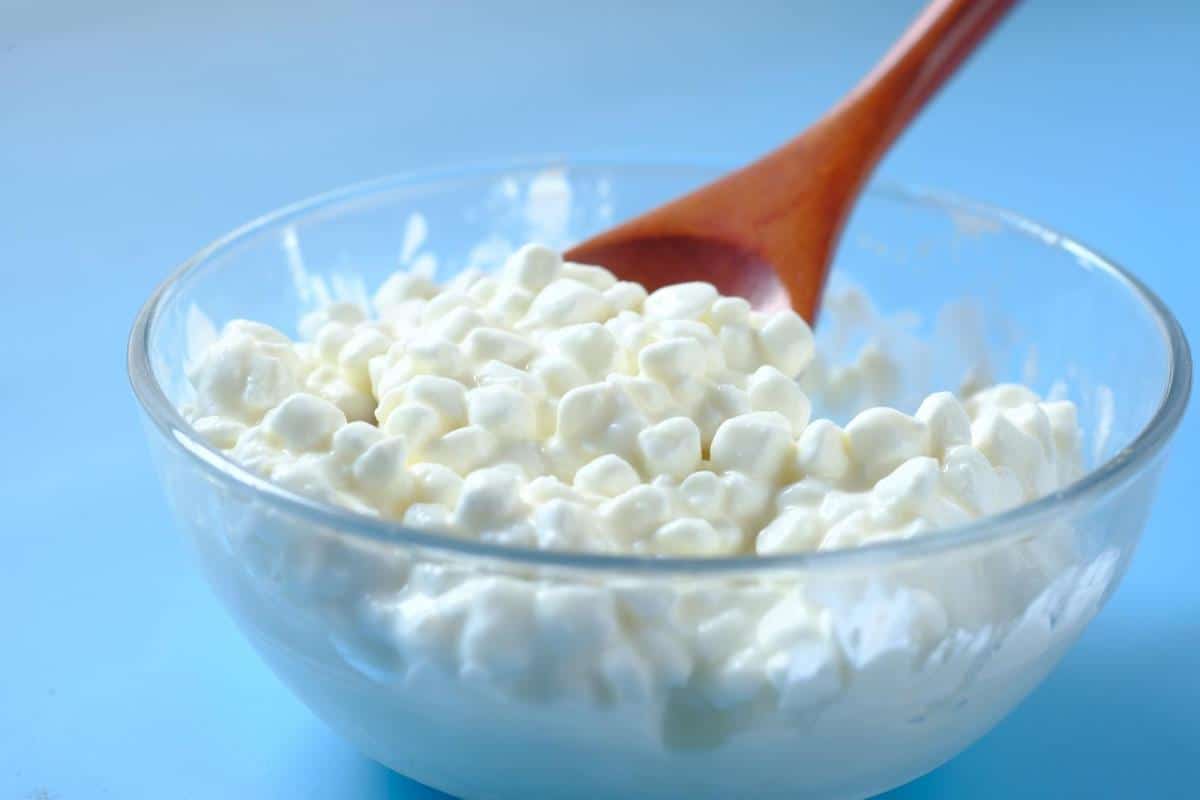
Like feta, cottage cheese is one of the most affordable and easiest-to-find low-calorie Cotija cheese substitutes. What I love most about it is you can now find lactose-free cottage cheese products.
It has a similar crumbly texture as Cotija cheese, but it's a lot softer and has more moisture. It's why I highly recommend using it in recipes that require cooking and baking rather than using it as toppings.
Of course, that isn't a rule written in stone. You can still sprinkle it on your pasta and tacos. But, I suggest that you remove the excess liquid or moisture. Simply wrap your cottage cheese in cheesecloth and wring it. Then, measure the amount that you need for your recipe.
Since cottage cheese is a bit milkier and saltier than Cotija cheese, with a bit of a sweet taste, only add half the amount required in your recipes.
Best for: Cottage cheese, while softer, offers a versatile substitute, ideal for salads, tacos, and even pasta dishes with its creamy texture similar to Cotija cheese.
5. Pecorino Romano Cheese
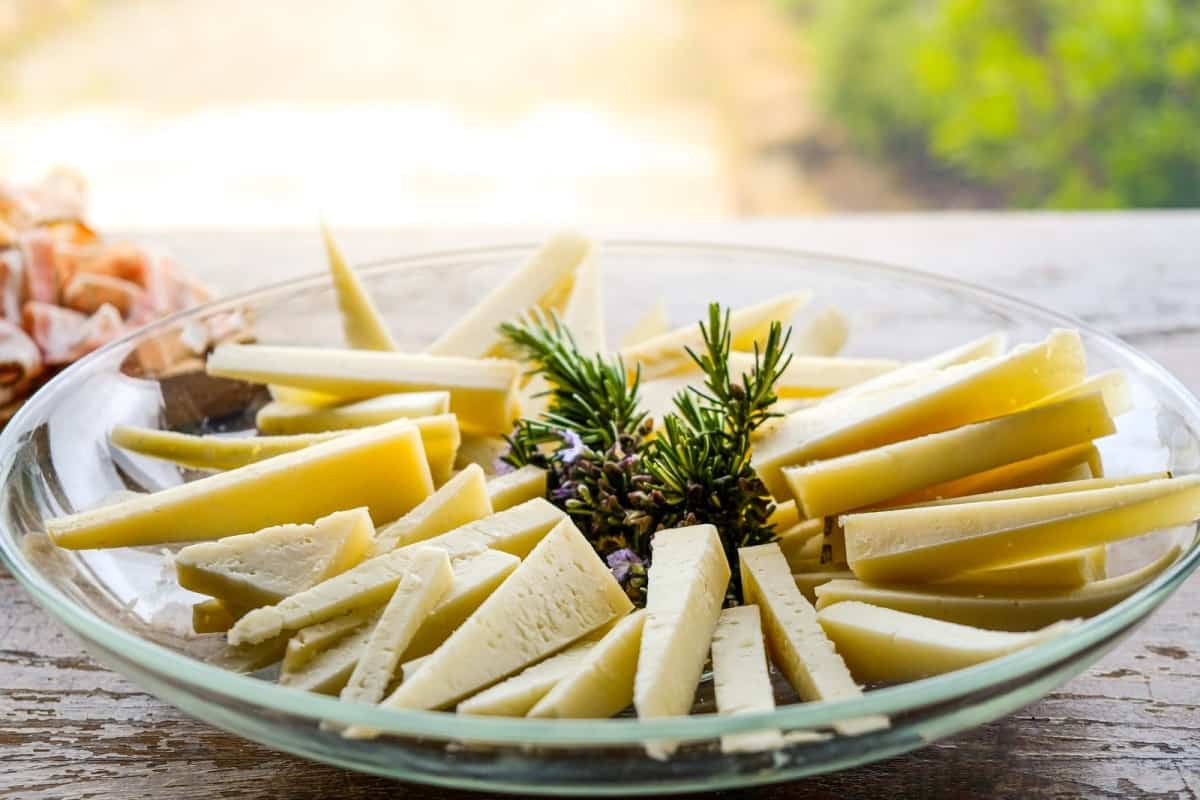
If you don't mind spending on high-quality ingredients, pecorino romano cheese is an excellent aged Cotija substitute you should consider. This Italian cheese is made from either goat's or cow's milk, but I suggest going for the former because well, Cotija is also a cow's milk-based cheese.
That said, whichever variety of pecorino romano cheese you opt for, it has the same crumbly texture as the aged version of Cotija. It also has the right amount of tangy and salty flavor, so it blends well with most ingredients. It's why I don't just use it in my Mexican cuisine recipes.
Replacing Cotija in your recipes with pecorino romano cheese is also easy because one cup of it is equivalent to a cup of Cotija cheese. If desired, consider exploring a suitable pecorino cheese substitutes or romano cheese substitute to adapt the recipe to your preferences or dietary needs.
Best for: Pecorino Romano cheese, known for its sharp, salty taste, is a robust substitute for Cotija cheese. It's perfect for grating over pasta, salads, and savory dishes, adding a bold flavor profile.
6. Goat Cheese Crumbles
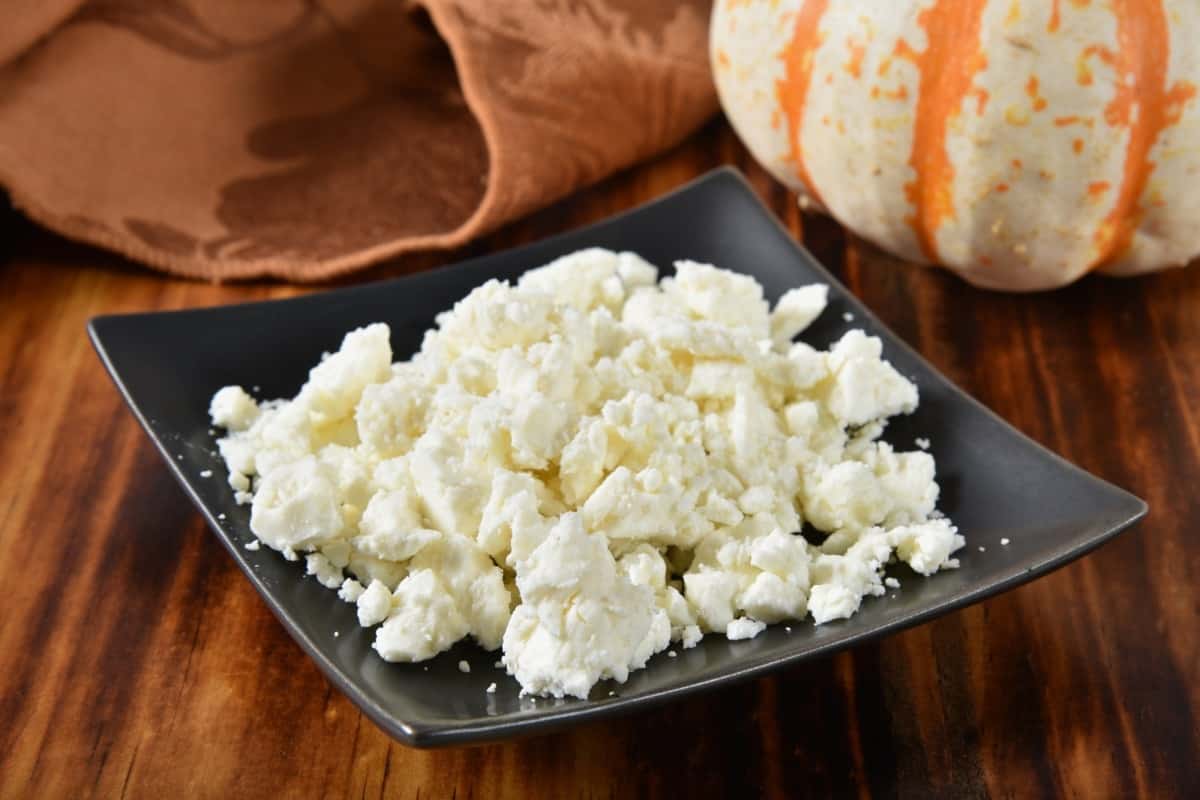
Like feta cheese, goat cheese is very easy to access, but not everyone likes its strong pungent flavor and aroma. It's why I only recommend it when you're replacing Cotija cheese as a fresh topping.
Goat cheese is also a bit moist, so you will need to allow it to air dry for 10 to 15 minutes. This drying process will make it easy for you to grate it into goat cheese crumbles.
Now, if you still plan on using it to add a bit of creaminess and tanginess to your soups and sauces, I suggest placing the goat cheese crumbles in your food processor. Pulse for a few seconds until you have pasty goat cheese.
Add half the amount of what's required in your recipe as a substitute for Cotija cheese.
Best for: Goat cheese, with its tangy flavor and creamy texture, serves as a substitute for Cotija cheese for crumbling over salads, tacos, and pasta dishes, offering a delightful twist.
Embracing Change with Cotija Cheese Substitutes
From adding a salty flavor to your Mexican street corn and creaminess to your soups and sauces to giving your salads and pasta a crumbly texture, the best Cotija cheese substitutes I have tried and tested won't disappoint.
Just make sure you choose an ingredient alternative that will mesh well with the other ingredients and be mindful of the amount you use when you substitute Cotija cheese in your recipes.




Recipe
Homemade Vegan, Dairy-Free Cotija Cheese Substitute
Equipment
- 2 large mixing bowls
- Medium-sized mixing bowl or bowl
- Colander
- Small saucepan
- Food processor or blender
- Spatula
- Cheesecloth
- Container with a lid
Ingredients
- 1.5 cups almonds
- 2 teaspoon agar powder
- 1 tablespoon distilled white or apple cider vinegar
- ½ tablespoon nutritional yeast
- 1 tablespoon salt
- ¼ cup water
- 3 tablespoon coconut oil
Instructions
- Place the almonds in your large mixing bowl and add enough room-temperature water until they're covered.
- Allow to soak for 10 to 12 hours (or overnight) at room temperature.
- Once done, remove the skin and dump the almonds into your colander and allow the water to drain.
- Put the drained almonds in your food processor or blender.
- Add the yeast, vinegar, and salt.
- Pulse until you have a smooth mixture.
- Transfer the mixture to your clean mixing bowl, ensuring you scrape off any mixture remaining in your appliance to avoid wastage. Set aside.
- In your saucepan, place the agar and water and allow to simmer over low-medium heat for three minutes or until the mixture thickens, ensuring you stir occasionally. If the agar isn't dissolving properly, add a teaspoon of water as and when needed.
- Slowly transfer your thickened agar mixture to your food processor or blender and add the cooking oil.
- Pulse for one to two minutes or until you have a mixture with a ricotta-like texture.
- Transfer the mixture to your bowl of almond mixture and mix them together using your spatula.
- Transfer the agar-almond mixture to your cheesecloth.
- Wrap the mixture with your cheesecloth, twist, and gently squeeze to remove excess liquid.
- Once you have removed the liquid, place the cheesecloth in a clean bowl and put it inside your fridge.
- Allow your cheese to set overnight, although you can already use it after six hours.
- Once set, unwrap the cheese and transfer it to a clean airtight container.
Notes
- This cotija cheese substitute can last up to a month when kept in an airtight, properly sealed container in the fridge or nine months when frozen.
- If you want to avoid nuts because you have a family member with nut allergies, you can replace the almonds with sunflower or hemp seeds.
- You can also use tofu, instead of almonds, which is easier to make because you no longer need the agar and coconut oil. Simply follow steps 4 to 6, replacing almonds with tofu, and then proceed to steps 12 to 16, replacing the agar-almond mixture with tofu.
You can find the video in the post above. If you don't see a video, please check your browser settings.
Leave a Reply